
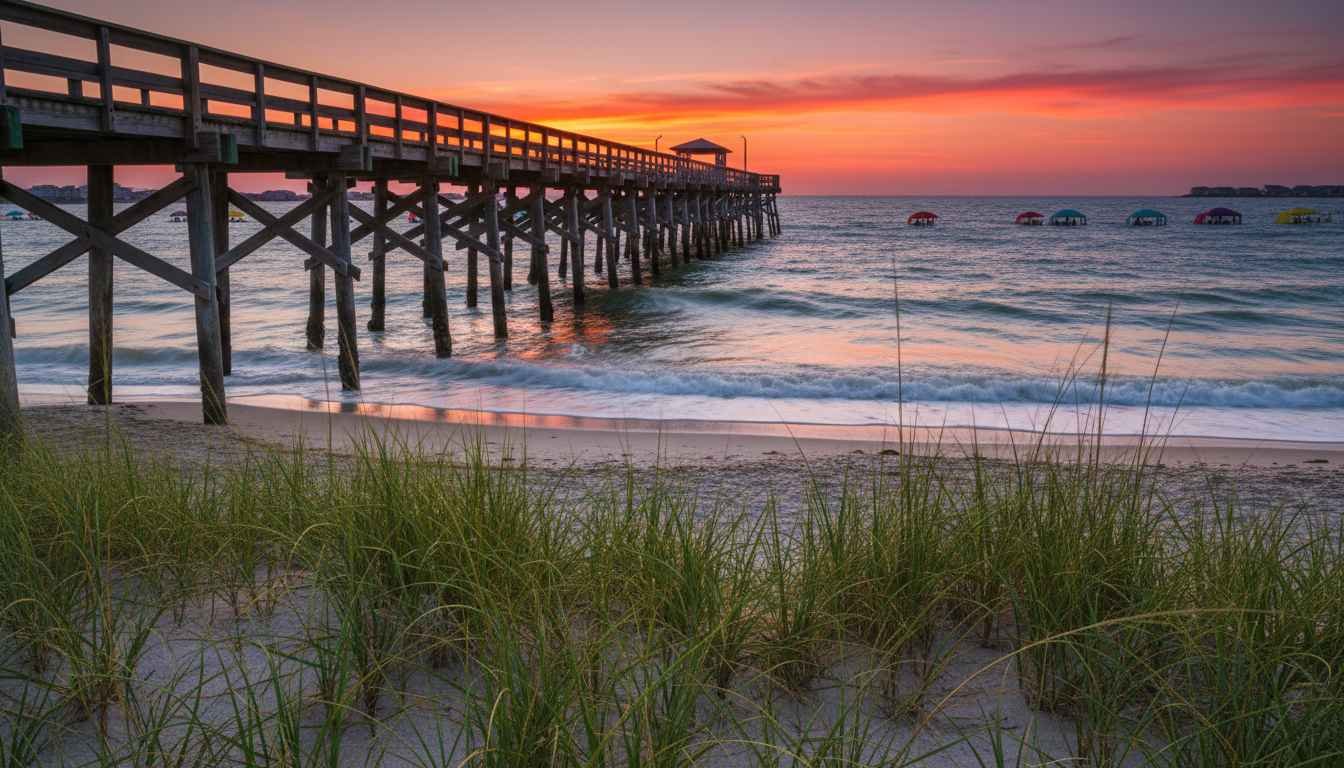
There is a particular Outer Banks moment that first-time visitors remember: standing on a wide, empty beach with the Atlantic on one side and a calm sound on the other, wondering how a place this wild is also this easy to enjoy. The Outer Banks — a string of barrier islands off the North Carolina coast — is not a single resort town. It is a long, thin landscape of beaches, dunes, fishing villages, and historic sites, and the best trips pick a stretch of it and settle in rather than racing from one end to the other.
This guide covers the places worth your time, how the islands fit together, and how to plan a visit that works for couples, families, and first-timers alike.
Getting Oriented: A String of Islands, Not One Town
The Outer Banks runs roughly north to south, from Corolla in the north through Duck, Kitty Hawk, Kill Devil Hills, and Nags Head, then down Hatteras Island to Ocracoke. The northern towns feel more built-up, with shops, restaurants, and family rentals; the southern islands feel wilder and quieter, with long stretches of national seashore. A car is essential — distances are long and public transport is limited — and many visitors base themselves in one town and make day trips from there. If you are travelling with children, the family-friendly beaches and attractions in our guide to the top ten places to visit with family are a useful cross-check for what keeps different ages happy.
Historic Sites: Where Flight and Maritime History Meet
Start with the Wright Brothers National Memorial at Kill Devil Hills, where the first powered, sustained, heavier-than-air flight took place in 1903. The visitor centre explains how two bicycle makers from Ohio solved a problem that had defeated better-funded rivals, and the walk up Kill Devil Hill to the memorial gives a sense of the open, windy ground they worked with. Further south, the Cape Hatteras Lighthouse at Buxton is unmissable — its black-and-white spiral stripes are famous for a reason. According to the U.S. National Park Service, it is the tallest brick lighthouse in the United States, and climbing it (when open) rewards you with sweeping views over the island. Roanoke Island adds another layer: the Elizabethan Gardens and the historic waterfront at Manteo tell the story of the early English settlement, and the North Carolina Aquarium on Roanoke Island is a calm, shaded stop that works well on a hot or rainy afternoon.
Natural Attractions: Beaches, Dunes, and Wild Horses
The Cape Hatteras National Seashore protects miles of undeveloped beach, dunes, and wildlife habitat along Hatteras Island — this is where you go for long walks, surf fishing, and beaches that never feel crowded. At Nags Head, Jockey’s Ridge State Park holds huge, shifting sand dunes where visitors fly kites, watch hang-gliders, and catch sunset from the top of a dune. In Corolla, at the northern end, wild horses roam the beaches and back roads; guided tours are the responsible way to see them, since the horses are protected and should not be approached or fed. Birdwatchers should also allow time for the Alligator River National Wildlife Refuge on the mainland side, a quiet, flat landscape of wetlands and pine forest.
Family-Friendly Days Out
The Outer Banks suits families because so much of the fun is outdoors and free or low-cost: building sandcastles, paddling in the sound (calmer than the ocean side, and better for small children), hiring bikes on the multi-use paths around Duck and Nags Head, and taking a ferry — the Hatteras-to-Ocracoke ferry is a free, scenic crossing that children tend to love. Older children often enjoy kayaking in the sound, surf lessons at Kitty Hawk or Nags Head, and mini-golf and go-karts in the busier towns. Keep one rule in mind for the ocean side: swim near lifeguarded beaches, respect rip-current warnings, and check the day’s surf conditions before anyone goes in.
Planning Tips for the Outer Banks
- Summer is the busiest season: book rental houses and restaurants ahead, and expect traffic on arrival and departure days.
- Shoulder seasons (late spring and early autumn) bring warm water, thinner crowds, and easier restaurant bookings.
- Pack for both sides of the islands: swimwear and sun protection for the beach, plus a light layer for breezy evenings.
- Check ferry times, lighthouse climbing availability, and national seashore alerts before you set out, as all three change seasonally.
FAQ: Places to Visit in Outer Banks NC
How many days do you need in the Outer Banks?
Three to five days is a good first visit: enough for a beach day, the Wright Brothers Memorial, the Cape Hatteras Lighthouse, and a trip to Roanoke Island or Ocracoke without rushing.
Is the Outer Banks good for families with small children?
Yes, especially the sound side, where the water is shallow and calm, and towns like Duck and Nags Head, which have bike paths, parks, and family restaurants. The ocean side needs closer supervision because of waves and currents.
Do you need a car in the Outer Banks?
Yes, for almost any trip. The islands stretch for well over a hundred miles, and the best beaches, lighthouses, and villages are spread out along them.
Final Thoughts
The Outer Banks rewards visitors who slow down: pick a base, learn one stretch of beach, visit one historic site properly, and leave an afternoon unplanned. Do that, and you will understand why people return year after year — not for a single attraction, but for the feeling of an island chain that still has room to breathe.