
West Virginia does not advertise its autumn as loudly as New England, and that is exactly why it is worth the trip. The state is almost entirely mountainous, its forests cover most of its land, and when those forests turn in October the whole state seems to glow. These places to visit in West Virginia in fall — its national park, its forests, its historic towns and its scenic drives — add up to one of the best autumn trips in the eastern United States, without the crowds that come with the more famous foliage destinations.
New River Gorge National Park in Fall
Start with New River Gorge National Park, the country’s newest national park, designated in late 2020. The gorge itself is the star: a deep river canyon crossed by the New River Gorge Bridge, one of the longest steel arch bridges in the world, with overlooks that are spectacular when the hardwood forests below turn red and gold. The Canyon Rim Visitor Center near Fayetteville is the best first stop, with views, exhibits and trail advice.
Below the bridge, the river offers white-water rafting that runs well into autumn, and the park’s trails range from easy rim walks to steep descents to the river. In October, combine a morning overlook visit with an afternoon hike — the light in the gorge is at its best in the late afternoon.
Monongahela National Forest and Spruce Knob
East of the park, the Monongahela National Forest holds the state’s highest and wildest country. Spruce Knob, at 4,863 feet, is the highest point in West Virginia, and its observation tower gives a panoramic view over forested ridges that stretch to the horizon — a view that is extraordinary when the whole landscape is in autumn colour. The drive up is part of the experience, winding through forest that changes colour with altitude.
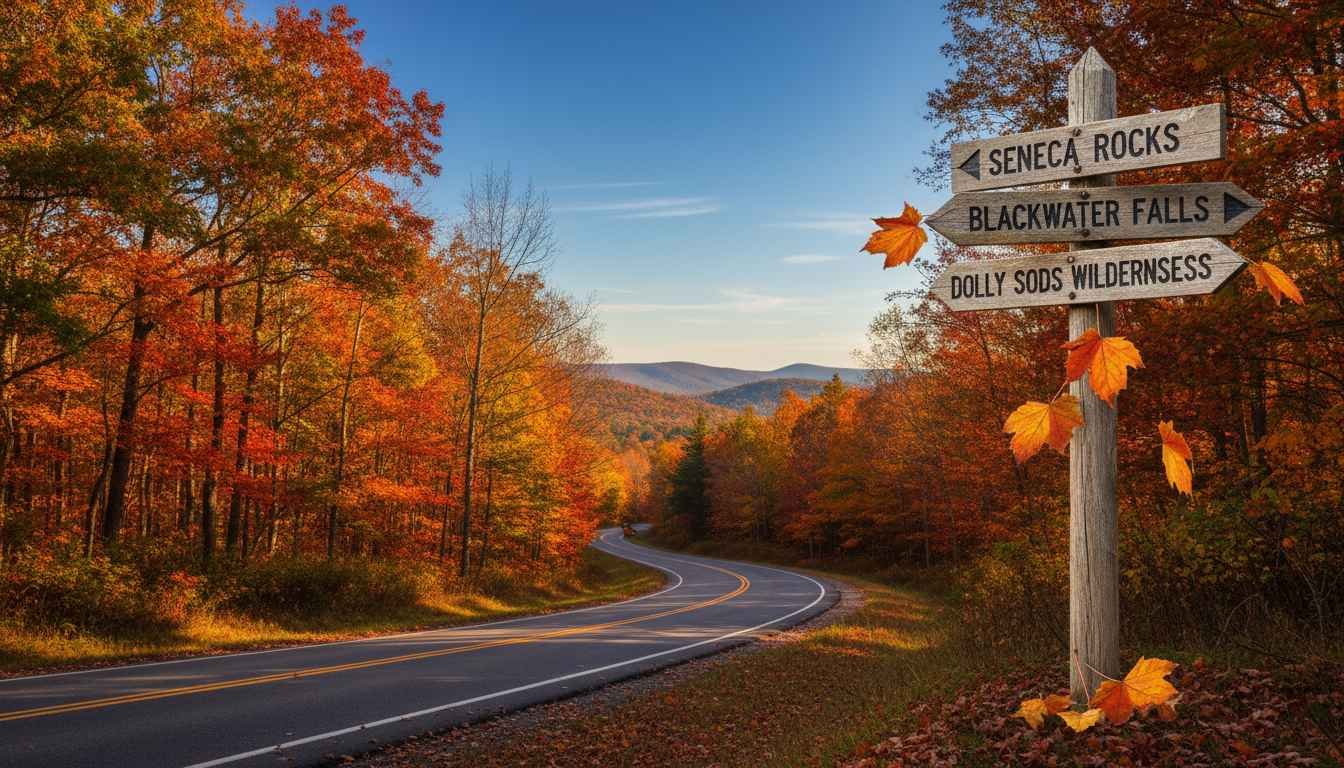
Nearby, Seneca Rocks — a dramatic fin of rock rising above the North Fork valley — offers both a viewing platform for casual visitors and a climbing area for experienced climbers. Blackwater Falls State Park, further north, pairs a waterfall with some of the state’s best fall colour, and its lodge makes a comfortable base for exploring the northern forests.
Harpers Ferry: History and Rivers in Autumn
Harpers Ferry, at the meeting of the Potomac and Shenandoah rivers, is the state’s most atmospheric historic town in fall. Its preserved 19th-century streets climb a hillside above the rivers, and the surrounding ridges turn colour early in the season. The town’s Civil War history — it changed hands repeatedly during the war and was the site of John Brown’s 1859 raid — is told through the National Historical Park’s museums and walking trails.
Walk the riverside trails, climb to Jefferson Rock for the classic view over the rivers, and allow time for the town’s small museums and shops. Harpers Ferry is also a practical stop: it sits within easy reach of Washington, D.C. and Baltimore, making it a good first or last day on a West Virginia trip.
Lewisburg and the Greenbrier Valley
South of the gorge, Lewisburg is one of the prettiest small towns in the state, with a preserved historic main street, independent shops, and a food scene that punches well above the town’s size. In fall, the surrounding Greenbrier Valley — farmland, limestone hills and hardwood forest — makes a gentle contrast to the rugged gorge country, and the town is a good overnight stop on a longer tour.
From Lewisburg, the Greenbrier River Trail — a rail trail running for miles along the river — offers flat, easy cycling and walking through autumn woodland, a welcome change of pace after mountain driving.
Scenic Drives, Trains and Fall Festivals
West Virginia’s scenic drives are among the best in the East. The Highland Scenic Highway cuts through the Monongahela forest with overlooks at every turn, and the Midland Trail (U.S. Route 60) crosses the state from east to west through gorge country and small towns. For a different pace, the Cass Scenic Railroad — a historic logging railroad — climbs into the mountains behind a steam locomotive, with autumn colour all around; book ahead, as fall weekends are popular.
Fall also brings harvest festivals across the state, celebrating everything from pumpkins to apples to local crafts. Dates vary from year to year, so check local listings for the weekend you travel rather than relying on a previous year’s calendar. For a broader autumn plan, our guide to places to visit in the fall in USA compares West Virginia with the other great fall regions, and if you are touring the wider region, our guide to the best place to visit in the fall East Coast covers the neighbouring autumn choices.
FAQ: Places to Visit in West Virginia in Fall
When is peak fall foliage in West Virginia?
Typically mid-October, with higher elevations turning first and lower valleys following. Northern areas and the highest ridges can peak in early October, while the southern valleys may hold colour into late October — check the state’s foliage reports for the week you travel.
What is the best scenic drive in West Virginia in fall?
The Highland Scenic Highway through the Monongahela National Forest is the classic choice, with sweeping overlooks and forest colour for miles. The Midland Trail is a good alternative if you want gorge scenery and small towns in one route.
Is New River Gorge worth visiting in fall?
Yes — autumn is arguably its best season. The overlooks are at their most colourful, the weather is comfortable for hiking, and the summer rafting crowds have thinned.
How many days do you need in West Virginia in fall?
Three to four days cover the gorge, the Monongahela forest and one historic town comfortably. A week lets you add Harpers Ferry, Lewisburg and a scenic railroad ride without rushing.
Final Thoughts
West Virginia in fall rewards travellers who look past the famous names. Its gorge, its forests, its historic towns and its back roads offer the same autumn beauty as the better-known destinations, with fewer crowds and a wilder feel. Come for the colour, stay for the towns and the trails, and you will understand why so many visitors leave calling it the East’s best-kept autumn secret.