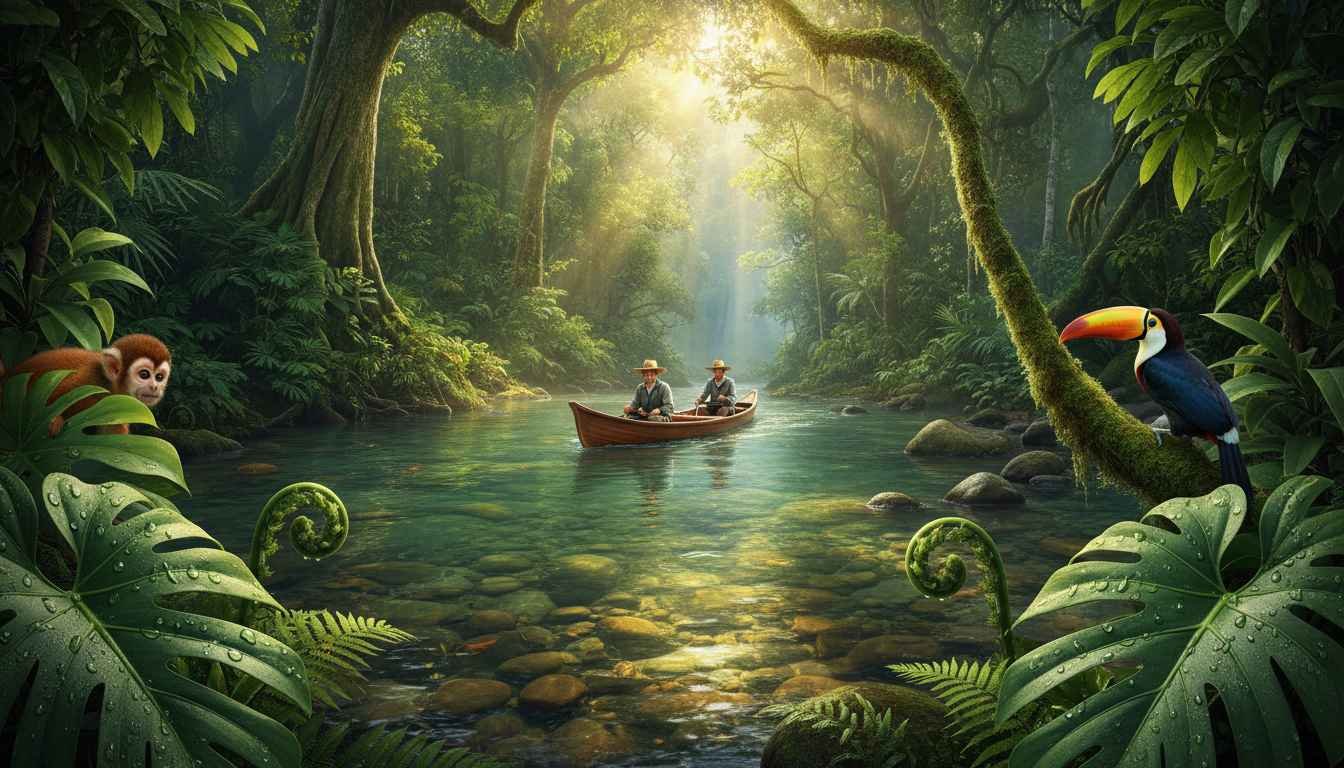
You wake before dawn to a sound you cannot identify — some bird, some insect, something entirely new — and step onto the lodge deck as mist lifts off the water. A pink river dolphin surfaces fifty meters away. Your guide points silently at the treeline, where a troop of monkeys is crossing the canopy. This is the Amazon, and no documentary prepares you for how loud, how green, and how alive it is. The rainforest spans nine countries, and where you enter it changes everything about your trip.
There is no single “best” place to visit the Amazon Rainforest. There is only the best place for you — and that depends on what kind of adventure you want, how much time you have, and whether you would rather walk the forest or paddle through it. Here is an honest breakdown of the main gateways.
First, Pick Your Season: Dry or Flooded
The Amazon has two seasons, and they produce two genuinely different trips. The low-water (dry) season, roughly June to November, is the best all-round window: trails open up, river beaches appear, wildlife concentrates around shrinking channels, and there are fewer mosquitoes. The high-water season, roughly December to May, raises the river by many meters and floods the forest — you explore by canoe among the treetops, eye-level with canopy wildlife, in what feels like a dream. If it is your first trip and you want jungle walks and animal sightings, aim for the dry season. If you want the surreal flooded-forest experience, go in high water. Cruises and lodges operate year-round, so neither season is a wrong choice.
Brazil: Manaus, the Classic Gateway
Manaus, a city of over two million people in the middle of the rainforest, reachable only by plane or boat, is where most first-timers start — and for good reason. From here you can visit the Meeting of the Waters, where the dark Rio Negro and the sandy Amazon River flow side by side without mixing for miles, and the Teatro Amazonas, the extravagant 19th-century opera house built with rubber-boom wealth, its dome tiled in the colors of the Brazilian flag.
Manaus is also the launch point for riverboat tours and jungle lodges along the Rio Negro, including trips to the Anavilhanas Archipelago, a vast maze of river islands with rich wildlife. Choose Brazil if you want the most developed tourism infrastructure, comfortable lodges, and the iconic river experiences. Fly in, spend a night, then travel onward by boat — in the Amazon, the rivers are the roads.
Peru: Iquitos, the Deep-Jungle Option
Iquitos is the largest city in the world unreachable by road — you arrive by plane or riverboat, and that isolation is the point. It is the base for river cruises and jungle lodges along the Amazon and its tributaries, including expeditions into the Pacaya-Samiria National Reserve, one of the largest protected flooded forests in the Amazon and superb for pink dolphins, giant river otters, and primates. Choose Iquitos if you want the deepest jungle immersion and are comfortable with longer travel days and rustic lodges.
Peru: Puerto Maldonado, the Easy Add-On
If you are already visiting Machu Picchu, Puerto Maldonado is the obvious Amazon extension — a short flight from Cusco. The surrounding Tambopata National Reserve offers excellent jungle lodges, macaw clay licks where hundreds of parrots gather at dawn, and some of the best-organized wildlife tourism in Peru. Choose Puerto Maldonado if your time is short and you want maximum wildlife per day without the expedition logistics of Iquitos.
Ecuador and Colombia: the Biodiversity Corners
The Ecuadorian Amazon, reached via the town of Coca, gives access to Yasuní National Park, one of the most biodiverse places on Earth per square kilometer — a strong pick for serious naturalists and birdwatchers. Leticia, Colombia, on the three-country border, is the hub for visiting Amacayacu National Park, with boat rides along the Amazon and strong Indigenous community tourism. Choose these if you want fewer tourists and a stronger cultural dimension to the trip.
How to Choose
Match the gateway to the traveler: first-timers who want comfort should pick Manaus or Puerto Maldonado; wildlife obsessives should aim for Tambopata or Yasuní in the dry season; romantics and photographers should consider the flooded season anywhere; and anyone combining the trip with the Andes should go via Puerto Maldonado. Whatever you choose, book a lodge or cruise with a naturalist guide — finding wildlife in the Amazon is a genuine skill, and a good guide does the hard work while you point and gasp. For inspiration beyond the rainforest, see these other adventure destinations around the world.
Frequently Asked Questions
What is the best time of year to visit the Amazon? The dry season (June to November) is best for wildlife viewing and jungle walks, since animals gather around shrinking water sources. The wet season (December to May) is best for canoeing through the flooded forest and birdwatching.
Do I need a guide, or can I explore on my own? Book a reputable lodge or tour operator with naturalist guides. Independent jungle exploration is unsafe and unproductive — guides know where wildlife is, manage the logistics, and keep you out of trouble.
What vaccinations do I need? This varies by country and itinerary, so consult your doctor or a travel clinic well before departure. Common recommendations for Amazon travel include yellow fever vaccination and malaria prevention — get professional advice, not internet advice.
Final Thoughts
The Amazon rewards patience and punishes schedules. Wildlife does not perform to a timetable, the rain will arrive when it arrives, and the best moments — the dolphin at dawn, the macaws at the clay lick — cannot be booked in advance. Pick the gateway that matches your style, pack for heat and rain, and let the forest set the pace. It will be unlike anywhere else you have ever been.