Walk down a busy street and you may pass a wall that stops you mid-step: a giant painted face, a burst of colour wrapped around a shopfront, a mural that looks like a fashion photograph brought to life. That is a fashion art wall — a public wall where fashion imagery, street art and graphic design meet, turning an ordinary surface into something people photograph, share and remember.
What Is a Fashion Art Wall?
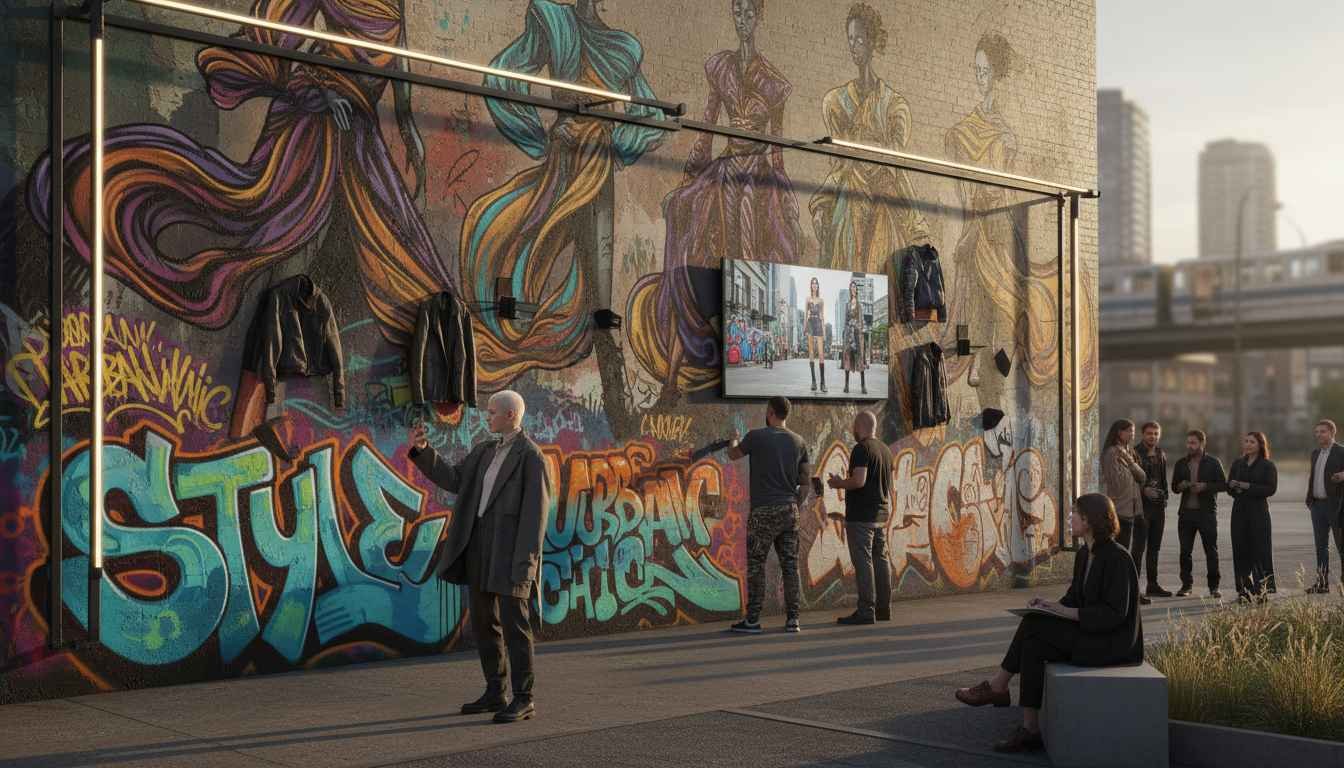
A fashion art wall is a large-scale, usually outdoor artwork that uses fashion as its subject or its visual language. It might be a painted mural of a model or a garment, a brand-commissioned wall tied to a collection, a community mural exploring identity and style, or an interactive installation that changes with light, movement or a phone screen. What they share is scale and placement: they are made to be seen in public, not hung in a gallery.
Unlike a billboard, a fashion art wall is meant to be looked at rather than just read. It borrows from street art, illustration, photography and graphic design, and it often reflects the neighbourhood around it — its colours, its people, its history.
From Street Art to the Mainstream
The roots of the fashion art wall lie in street art and mural culture, where walls have long been used to make public statements about identity, belonging and protest. As street art gained wider acceptance, fashion — itself a visual language of identity — became a natural subject. Designers and artists began treating walls the way they treated a runway or a magazine page: as a place to show a look, tell a story or make a statement.
Over time, fashion houses, retailers and city projects began commissioning walls of their own. A mural tied to a new collection, a seasonal window display extended onto a building, or a festival wall celebrating local makers — all of these brought fashion imagery out of stores and into the street. Social media accelerated the shift: a striking wall is photographed and shared, which gives it an audience far beyond the people who walk past it.
Design Principles That Make a Wall Work
The strongest fashion art walls share a few practical qualities. First, the image reads clearly from a distance — bold shapes, limited colours and one clear focal point beat a cluttered design. Second, the scale suits the wall: a design that works on a shopfront may be lost on a ten-storey building, and vice versa. Third, the wall fits its setting. A mural that echoes local architecture, colours or culture feels like part of the street; one that ignores its surroundings can feel imposed, however beautiful it is.
Durability matters as well. Outdoor walls face weather, sunlight and wear, so artists choose paints and coatings suited to exterior use, and owners plan for cleaning and touch-ups. A wall that fades or peels within a year loses much of its impact, however striking the original design.
Why Cities and Brands Invest in Them
For cities and neighbourhoods, a well-made art wall can give a street an identity. It draws foot traffic, gives visitors a reason to stop, and can become a local landmark that people use when giving directions or recommending a visit. For brands, a wall offers something a printed advertisement cannot: a physical presence that people experience in real life and photograph voluntarily.
For artists, walls offer scale and audience that a gallery rarely provides. A single wall can be seen by thousands of passers-by every day, including people who would never visit an exhibition. That public reach is part of the appeal — and part of the responsibility, since the work speaks for a whole street, not just its creator.
Potential Drawbacks and Honest Limits
Fashion art walls are not without problems. Costs can be high: design, materials, scaffolding, permissions and maintenance all add up, and a wall that is not maintained quickly becomes an eyesore. Vandalism and weather damage are ongoing risks, especially for walls in exposed locations.
There is also a genuine tension between art and advertising. When a wall is commissioned by a brand, viewers may reasonably ask whether they are looking at art or at marketing. The best brand walls acknowledge that tension by giving the artist real creative room; the weakest read as a logo painted large. Communities can also object when a wall feels disconnected from local culture, or when a private project takes over a shared public surface without consultation.
Anyone planning a wall — a property owner, a council, a brand or an artist — should settle permissions, maintenance and community input before painting begins. A wall that the neighbourhood welcomes will be looked after; one imposed on it will not.
The Modern Era: Interactive and Digital Walls
Newer fashion art walls increasingly mix paint with technology: projections that change after dark, augmented-reality layers viewed through a phone, motion sensors that respond to passers-by, or temporary installations for festivals and launches. These approaches suit fashion’s fast-moving nature — a wall can change with a season or a collection without repainting the whole surface.
Temporary and digital walls also lower the stakes for experimentation. A pop-up wall can test an idea, celebrate an event or showcase emerging local designers without the long-term commitment of a permanent mural. For smaller towns and independent makers, that flexibility matters: it lets them join a visual culture that was once limited to big-city budgets.
Frequently Asked Questions
Is a fashion art wall the same as graffiti?
Not exactly. Graffiti and street art are part of its history, but a fashion art wall is usually a planned, permitted work with a fashion theme. Graffiti may be unauthorised and focused on lettering or tagging; a fashion art wall is closer to a commissioned mural.
Do fashion art walls help local businesses?
They can, by drawing foot traffic and giving a street a recognisable identity that visitors photograph and share. The effect depends on location, maintenance and whether the wall genuinely fits the area — a neglected or out-of-place wall helps no one.
Can anyone commission a fashion art wall?
In principle, yes, but permission is essential. The wall’s owner must agree, and local rules may require permits, especially for large or listed buildings. Artists, brands and councils usually work through a written agreement covering design approval, payment, maintenance and how long the work stays up.
Final Thoughts
A fashion art wall works when it does two things at once: it looks striking, and it belongs where it stands. Its journey from street-art roots to commissioned city landmarks shows how fashion and public art can speak to each other — one giving the other scale, colour and an audience. Whether you encounter one as a visitor, photograph it as a fan, or plan one as an artist or a brand, the walls worth remembering are the ones that respect their street as much as they decorate it. For more on how fashion itself keeps changing, see this guide to how to stay ahead in the ever-evolving fashion world.