You are standing in the driveway with the keys in your hand, a playlist ready, and a route in mind that looks wonderful on the map. The only question hanging over the trip is the one nobody likes to ask out loud: how much will this actually cost? A road trip planned on a budget does not have to feel small or restricted. It just needs a clear plan before the wheels start turning.
Start With a Total Budget, Not a Daily Guess
Most road-trip overspending happens before departure, when the budget exists only as a vague feeling. Write down one total figure you can genuinely afford, then divide it into categories: fuel, accommodation, food, activities, tolls and parking, and a contingency buffer for surprises such as a tyre repair or an unplanned detour.
As a planning guide, many travellers find it helpful to reserve the largest shares for fuel and stays, keep food flexible, and protect a buffer of around ten percent of the total. Those proportions are a starting point for your own numbers, not a rule. The point is that every pound or dollar has a job before you leave, so a single expensive day cannot quietly swallow the rest of the trip.
Choose a Route That Fits Your Budget
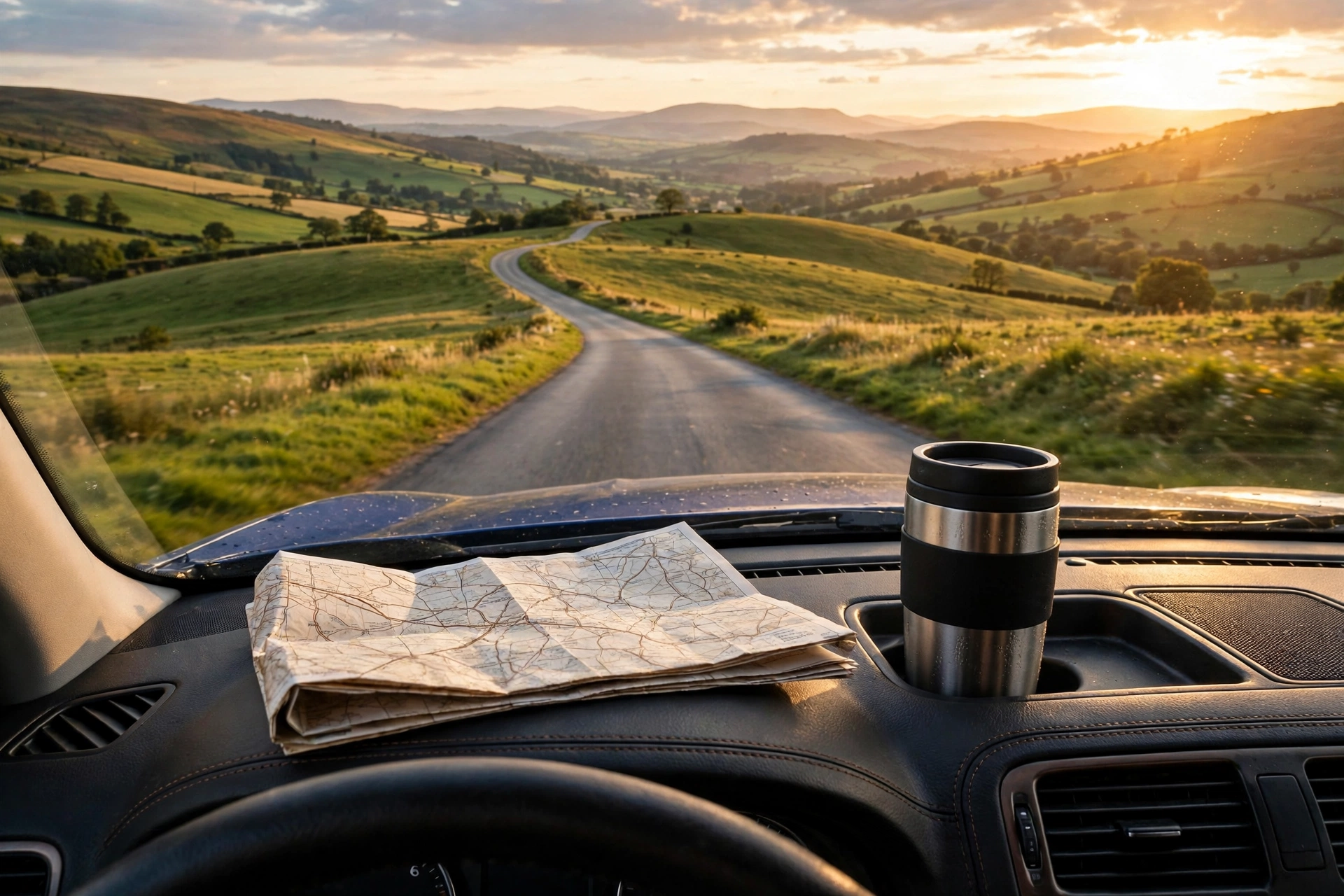
A route is a budget decision disguised as a map. Long jumps between far-apart stops burn fuel, shorten the time you actually enjoy each place, and often force a pricier last-minute stay. A tighter loop, with driving days you can comfortably complete without rushing, usually costs less and feels better.
When you sketch the route, check the practical details: toll roads, paid parking in busy towns, and places where fuel stations are sparse. Build in one shorter day in the middle of the trip. It gives you a rest, a chance to catch up on laundry or car checks, and a buffer if weather or roadworks slow you down.
Cut Fuel Costs Without Cutting the Trip Short
Fuel is usually the least flexible cost on a road trip, but it is not fixed. Driving at a steady, sensible speed, avoiding heavy acceleration, and keeping tyres at the pressure recommended in your car manual all help the car use fuel more efficiently. Planning fuel stops in towns rather than at isolated motorway service stations can also help, since prices often vary by location.
Weight matters too. A roof box and a boot packed with things you never use both add drag and load. Learning how to pack light for a two-week trip is useful even for a shorter drive, because a lighter, better-organised car is easier to live out of and cheaper to run.
Book Stays That Save Money Without Ruining Sleep
Accommodation is where a road trip budget is most often won or lost. A cheap room far from everything can cost you extra driving the next morning, while a well-located modest stay can save both fuel and time. Compare the total cost, including parking and breakfast, rather than the headline room rate alone.
Mixing stay types works well on a longer route: a simple guesthouse or budget hotel on driving days, and a slightly better stay where you plan to spend two nights and explore properly. Before you book anywhere unfamiliar, read up on how to find cheap accommodation without booking scams, so a too-good-to-be-true listing does not turn into a lost deposit or a ruined first night.
Eat Well for Less on the Road
Food spending creeps up through convenience: a service-station snack here, a coffee there, a rushed dinner because nobody planned ahead. A small cooler changes that pattern completely. Stock it with water, fruit, sandwiches, and snacks at a supermarket, and you have real choices at every stop.
That does not mean eating only sandwiches. Pick one meal a day to enjoy properly, ideally lunch at a local cafe or market, when prices are often lower than dinner and the atmosphere is just as good. Cook simply on nights when your stay has a kitchen, and save the special restaurant for a place you genuinely want to remember.
Plan Free and Low-Cost Stops First
The most memorable parts of a road trip are often the cheapest: a coastal viewpoint at sunrise, a walk through an old town, a public park, a local market, or a riverside trail. Plan these first, then add paid attractions selectively, choosing the one or two that truly interest you rather than ticking off every ticketed sight on the route.
This order also protects the budget. When the free stops already fill the day nicely, a paid attraction becomes a deliberate choice, not a default. Check opening times and any entry fees in advance, so you are not paying for a rushed visit that closes an hour after you arrive.
Prepare the Car and Stay Safe on the Road
A breakdown is expensive in money, time, and mood, so a pre-trip check is part of budgeting, not an optional extra. Check tyres, oil, coolant, lights, wipers, and brakes, and make sure the spare tyre or repair kit is actually usable. Keep water, a phone charger, a torch, and basic first-aid supplies in the car.
The same care applies to personal safety at stops, especially in places you do not know well. The practical advice in travel safety tips for first-time international travelers applies just as well to a domestic drive: keep valuables out of sight, share your route with someone at home, and trust your judgement about poorly lit or isolated parking areas at night.
Keep Daily Spending Visible
A budget only works if you can see it during the trip. Each evening, take five minutes to note what you spent on fuel, stays, food, and extras, and compare it with the day’s plan.
If one day runs over, do not try to fix it by skipping meals or driving exhausted the next day. Adjust something painless instead: swap a paid attraction for a free walk, cook dinner instead of eating out, or shorten the next driving leg. Small, calm corrections keep the trip enjoyable and the total on track.
Common Budget Mistakes to Avoid
- Planning the route by distance alone, without checking tolls, parking, and fuel availability.
- Booking the cheapest stay without checking its location, parking charges, and reviews.
- Leaving food entirely to chance, then paying service-station prices at every stop.
- Forgetting the contingency buffer, so one repair or detour breaks the whole budget.
- Trying to cover too many places in too few days, which raises fuel costs and lowers enjoyment.
FAQ
How much should I budget per day for a road trip?
There is no single correct daily figure, because fuel prices, stay costs, and eating habits vary so much by route and region. Start from your total trip budget, subtract fixed costs such as accommodation already booked, then divide what remains by the number of days. That gives you a realistic daily allowance for your trip, rather than a number borrowed from someone else’s.
Can I plan a road trip without booking everything in advance?
Yes, especially outside peak season, but keep the first night and any stay in a busy or remote area booked. Flexibility saves money when you can move a stop, but arriving late in an unfamiliar town with no room available rarely does.
Is it worth paying for toll roads to save time?
Sometimes. Compare the toll cost against the fuel and time saved, and against what you would enjoy doing with that saved time. On a relaxed holiday route, the slower scenic road is often the better experience as well as the cheaper one.
Final Thoughts
A budget road trip is not about saying no to everything enjoyable. It is about deciding in advance what matters most to you, building the route and the spending plan around those priorities, and leaving room for the unexpected. Set the total, choose a route you can drive comfortably, keep fuel and food costs visible, and let the free stops do much of the work. Do that, and the drive itself becomes part of the holiday, not just the way to get there.