The thermometer has been climbing since breakfast, the air feels thick, and the fan in your living room is just pushing warm air around. Then you remember the river — twenty minutes away, shaded by old trees, the water running clear and cold over smooth stones. There is a reason rivers have been humanity’s favorite escape from summer heat for as long as summers have existed: cool water, moving air, and shade do what no air conditioner can quite replicate. Here is how to plan a river day that actually delivers that relief — safely and memorably.
Why the River Cools You Down So Well
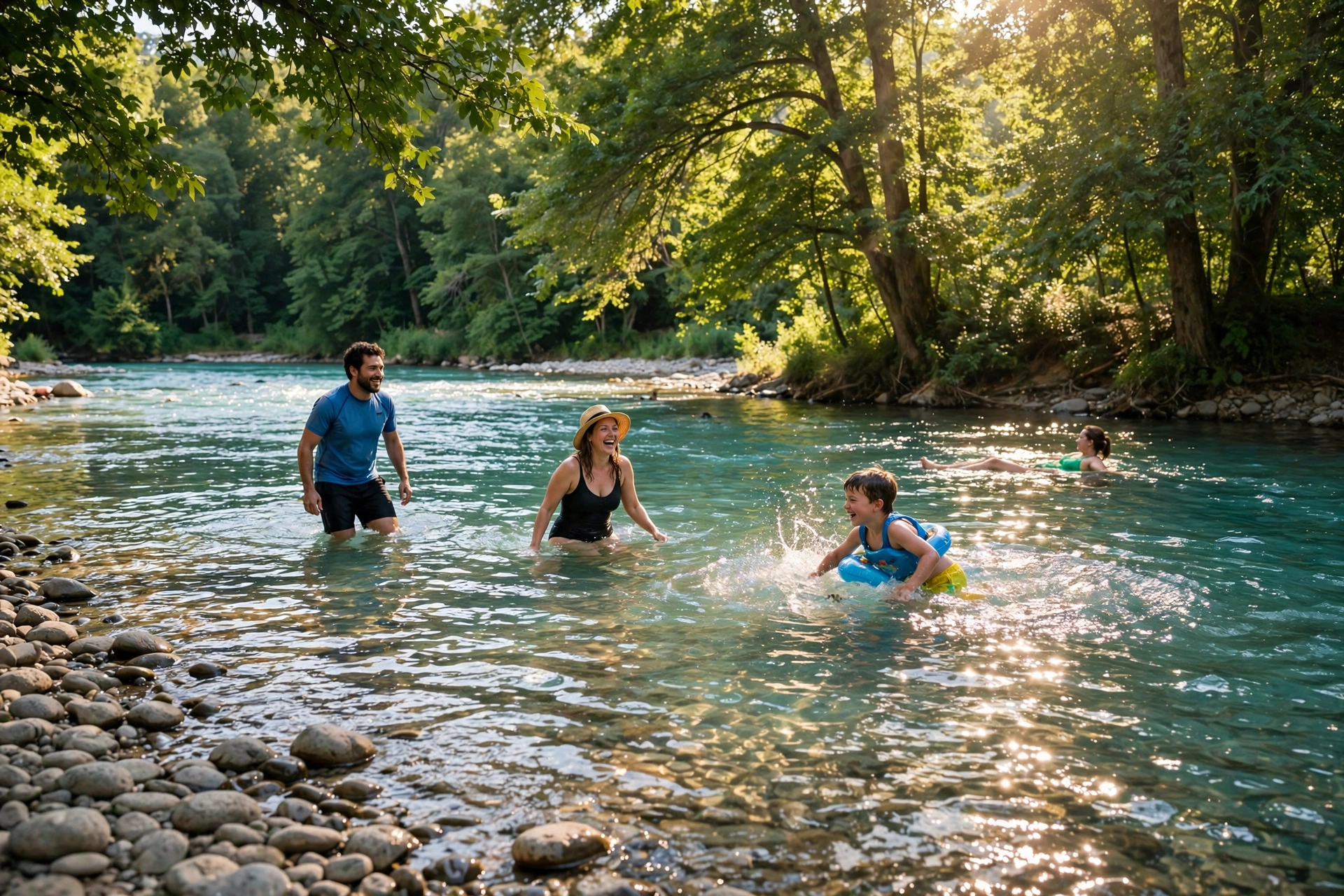
Water draws heat away from your body far faster than air does, which is why even ankle-deep wading feels instantly relieving on a scorching day. A river adds two more advantages over a still lake or pool: the current creates a constant breeze-like flow against your skin, and riverside trees usually provide deep, natural shade. Together, moving water and shade can make a 38-degree afternoon feel genuinely pleasant.
Choose the Right Spot
Not every stretch of river is a good swimming spot. Look for a location with a gentle current, a visible riverbed, and easy entry from a bank or beach area rather than a steep drop. Public access points, state parks, and designated swimming areas are your safest bets because they are maintained and usually signposted with depth and current information.
Check conditions before you go. Heavy rain upstream can turn a calm river dangerous within hours, even if the sky above you is blue. A quick check of local weather and river-level advisories takes two minutes and is the single most important part of your planning.
What to Pack for a River Day
A great river day is mostly about preparation. Pack more water than you think you need — heat and swimming dehydrate you quietly — along with sun protection, a towel or quick-dry wrap, and water shoes. Riverbeds hide sharp stones and the occasional broken shell, and water shoes turn a painful shuffle into a comfortable stroll.
Bring a dry bag for your phone, keys, and a change of clothes. A simple picnic — fruit, sandwiches, cold drinks in a cooler — keeps you at the river through the hottest part of the afternoon instead of driving home hungry. And take a rubbish bag: rivers stay beautiful only if every visitor carries out what they carried in.
The Best Ways to Cool Off
Start by wading in slowly rather than plunging in; cold water on overheated skin can take your breath away. Once you are in, you have options: float on your back in a calm pool, swim short stretches against a gentle current for a natural workout, or simply sit on the bank with your feet in the flow while you read. Parents with small children often find that a shallow, slow-moving section is the perfect natural splash pool.
Alternate between water and shade. Twenty to thirty minutes in the water followed by rest under the trees keeps you cool without overexposure to sun or cold. If you are turning the outing into a longer escape, consider lakeside destinations in Michigan, where beaches, dunes, and waterfront towns make an easy multi-day trip out of the same idea.
Stay Safe in and Around the Water
Rivers deserve respect. Never swim alone, and keep children within arm’s reach at all times — currents that look gentle from the bank can be surprisingly strong. Enter the water feet first, never dive into water you have not checked, and wear a properly fitted life jacket if anyone in your group is not a confident swimmer.
Skip the alcohol while swimming; it impairs judgment, balance, and your body’s ability to handle cold water. If thunder sounds, leave the water immediately and wait at least 30 minutes after the last clap before going back in. The American Red Cross guide to lake and river swimming safety is worth reading before your first trip of the season — most river accidents come down to a handful of avoidable mistakes.
Leave the River Better Than You Found It
Rivers are shared. Keep sunscreen and insect repellent use reasonable before swimming, avoid soaps and shampoos in the water, and pack out every scrap of litter — including food waste, which disrupts the local ecosystem. If you see rubbish someone else left, picking it up takes seconds and keeps the spot welcoming for the next visitor.
Frequently Asked Questions
Is it safe to swim in rivers?
It can be, at designated swimming areas with gentle currents and good visibility. Always check recent weather and water conditions, swim with a companion, and avoid rivers after heavy rain, when currents and debris increase sharply.
What should I wear to the river?
A swimsuit, water shoes, a hat, and a light cover-up for the walk back. Quick-dry fabrics beat cotton, which stays cold and heavy once wet.
Can young children play safely at the river?
Yes, in shallow, slow-moving sections with constant adult supervision — within arm’s reach, not from a towel ten meters away. A U.S. Coast Guard-approved life jacket adds an important layer of protection for weak swimmers.
Final Thoughts
A river day is one of summer’s simplest pleasures, and it asks for very little: a safe spot, a packed bag, and respect for the water. Choose your location carefully, watch the weather, look after your group, and leave the bank cleaner than you found it. Do that, and the river will do the rest — cool water, shade, and an afternoon your body will thank you for.