
Watch a two-year-old figure out how to stack blocks, or a four-year-old negotiate the rules of a game with a friend, and you are watching something remarkable: a brain building itself in real time. The early years — roughly birth to age five — are when the foundations of learning, behavior, and health are laid down. What happens during this window does not determine everything about a person’s life, but it shapes the starting conditions for all of it. Here is why those years matter so much, and what genuinely helps during them.
Note: this article shares general information about child development. It is not medical advice — for concerns about a specific child, speak with your pediatrician.
The Early Years Build the Brain’s Architecture
In the first years of life, the brain forms neural connections at an extraordinary pace, and the experiences a child has — being talked to, comforted, played with, kept safe — directly influence which connections strengthen and which fade. This is why researchers and pediatricians emphasize responsive caregiving: when adults consistently notice, interpret, and respond to a child’s signals, the child learns that the world is predictable and that they matter. That sense of security becomes the platform for curiosity, learning, and emotional regulation.
None of this requires expensive programs or elaborate equipment. The most powerful developmental tools are free: conversation, eye contact, reading aloud, singing, and unstructured play.
The Five Areas of Early Development
Child development is usually described across several interlocking areas. Understanding them helps you see the whole child rather than fixating on a single skill:
Social and emotional development. Learning to recognize feelings, manage frustration, and form relationships. A toddler who is comforted after a tantrum is learning that big emotions are survivable — the first lesson in self-regulation.
Language and communication. From cooing to sentences, language grows through back-and-forth interaction. Talking with a baby — narrating what you are doing, responding to their babbles — builds the vocabulary and comprehension that later support reading.
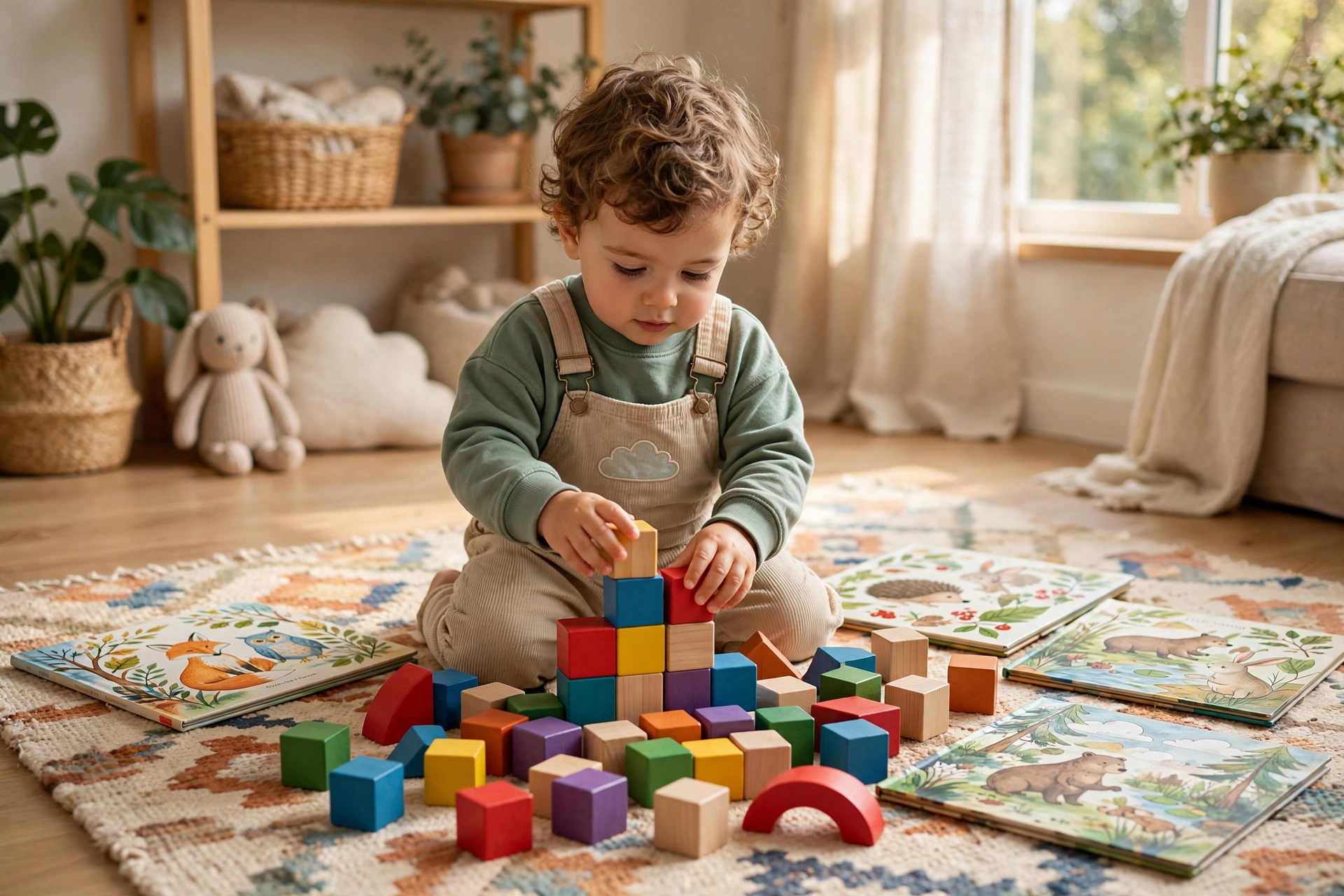
Cognitive development. Thinking, problem-solving, and understanding cause and effect. Stacking blocks, sorting shapes, and asking endless “why” questions are all cognitive workouts.
Physical development. Both gross motor skills (running, climbing, balancing) and fine motor skills (grasping, drawing, buttoning). Active play outdoors supports both, along with sleep and nutrition.
Approaches to learning. Curiosity, persistence, and the willingness to try again after failing — the attitudes that determine how a child uses every other skill. These are shaped more by how adults respond to mistakes than by any curriculum.
What Actually Helps: Everyday Interactions
If there is one principle worth remembering, it is this: development is driven by interaction, not instruction. Reading together daily, letting a child help with simple tasks, playing pretend, spending time outdoors — these ordinary moments are the curriculum. Children learn language from conversation, not from flashcards; they learn problem-solving from open-ended play, not from apps that solve problems for them.
Consistency matters more than intensity. Fifteen minutes of genuinely attentive play each day does more than a weekend of elaborate activities while a parent scrolls nearby. Put the phone down, follow the child’s lead, and narrate what is happening — you are building both skills and connection at once.
Milestones Are Guideposts, Not Deadlines
Developmental milestones — first steps, first words, and the like — are useful reference points, but children reach them on their own timelines, and wide variation is normal. Comparing your child to another child the same age is one of the fastest routes to unnecessary worry.
That said, milestones exist for a reason: they help parents and pediatricians notice when a child might benefit from extra support, and early support works best when it starts early. The Center for Parent Information and Resources maintains a developmental milestones page that links to milestone checklists and resources, including the CDC’s “Learn the Signs. Act Early.” materials. If something about your child’s development concerns you, raise it with your pediatrician — you do not need to wait for a scheduled checkup, and you do not need anyone’s permission to ask.
As Children Grow, Play Keeps Teaching
The play-based learning of the early years does not stop mattering once a child starts school — it evolves. Games with rules teach turn-taking and strategy; building projects teach planning and persistence; stories teach empathy and vocabulary. As children get older, structured play like educational games that keep teenagers engaged can continue developing the critical thinking and problem-solving foundations laid down in early childhood. The medium changes; the principle stays the same: children learn best by doing.
Frequently Asked Questions
At what age should my child start talking?
Timelines vary widely — some children say first words around their first birthday, others take longer, and both can be perfectly typical. What matters more is steady progress: increasing babbling, gestures, and understanding over time. If your child is not meeting communication milestones or seems to lose skills they had, discuss it with your pediatrician promptly.
How much screen time is okay for young children?
Pediatric guidance generally favors minimizing passive screen time for the youngest children and prioritizing interactive play instead. When screens are used, choose high-quality content, watch together, and talk about what you see — co-viewing turns a passive experience into an interactive one. Your pediatrician can advise based on your child’s age.
Do educational toys matter more than ordinary play?
No. Research consistently finds that the interaction around the toy matters far more than the toy itself. Blocks, balls, crayons, cardboard boxes, and outdoor play build just as much — often more — than expensive electronic toys. The best “educational toy” is an engaged adult.
Final Thoughts
The early years matter because they build the architecture everything else rests on: the brain’s connections, the child’s sense of security, the habits of curiosity and persistence. And the way to support them is refreshingly ordinary — talk, read, play, respond, repeat. You do not need to optimize childhood. You need to show up for it, consistently, with attention and warmth. That is what the early years are for.