
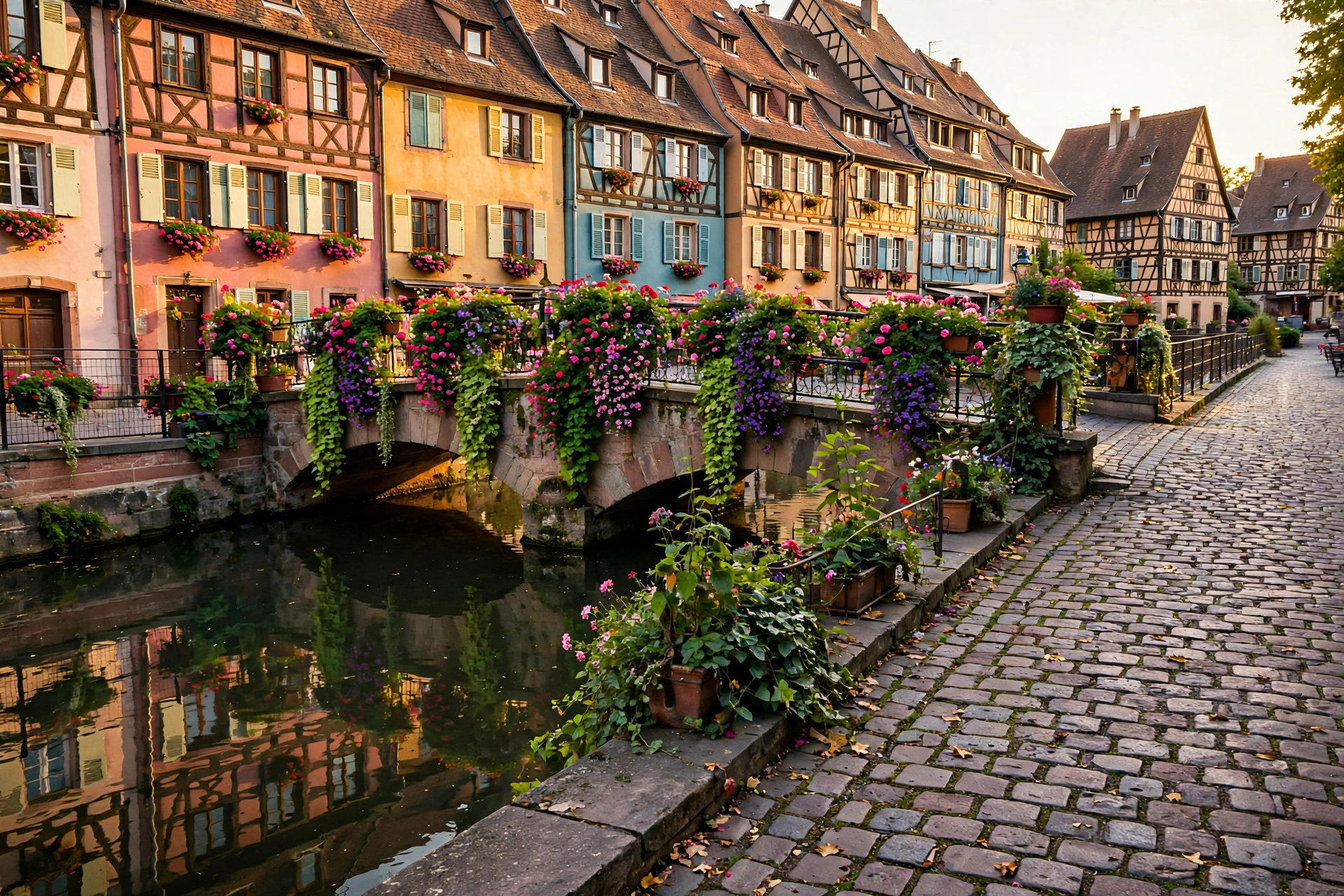
Picture yourself crossing a small bridge in the early evening, flower boxes spilling over the railings, pastel half-timbered houses reflected in the canal below. That first view of Little Venice is why so many travellers fall for Colmar — but the town rewards you most when you slow down beyond the photograph, wander its old streets, sit down to an Alsatian meal, and give its museum and wine villages a proper look.
Little Venice and the Old Town
Start in Petite Venise, the canal quarter where the Lauch river threads between colourful houses that once belonged to market gardeners, tanners and fishermen. The best way to see it is on foot: cross the little bridges, follow the quays, and then drift into the wider old town, where timber-framed facades, oriel windows and painted signs reward unhurried looking. Two houses visitors often seek out are the Pfister House, with its striking painted panels and wooden gallery, and the House of Heads, decorated with sculpted faces. Neither needs a long visit — the pleasure is in noticing the detail as you walk.
Colmar is compact and walkable, and that is its great advantage. You can cover the historic centre in a morning, then return to a favourite street later in the day when the light changes. Wear comfortable shoes for cobbles, and keep an eye out for the small courtyards and passages that open off the main streets.
The Unterlinden Museum and the Isenheim Altarpiece
For a completely different side of Colmar, spend a couple of hours at the Unterlinden Museum, housed in a former 13th-century Dominican convent with a modern extension. Its most famous work is the Isenheim Altarpiece, painted by Matthias Grünewald between 1512 and 1516 with sculptures by Nikolaus Hagenauer, made for the Antonite monastery hospital at Isenheim. It is a large, multi-panel work, and the museum displays it in the former convent chapel, which suits its scale and subject.
Do not rush past the rest of the collection on your way to the altarpiece. The museum also holds medieval and Renaissance art from the Upper Rhine, archaeological finds and later works, so it works well as a slower, indoor counterpoint to a day of walking. Check current opening days and hours before you go, as the museum is traditionally closed on Tuesdays.
Alsace Wine Villages Around Colmar
Colmar sits on the Alsace Wine Route, and the villages around it are an easy extension of a town visit. Eguisheim, Riquewihr and Kaysersberg are all small, walkable and distinct: concentric lanes in Eguisheim, a single handsome main street in Riquewihr, and a castle ruin above the vineyards in Kaysersberg. If you are tasting wine, look for the classic Alsace varieties — Riesling, Pinot Gris and Gewürztraminer — and ask producers about dry versus off-dry styles rather than assuming sweetness from the grape name.
If you are driving, plan tastings around a designated driver or a guided tour, and if you are not, check bus and train connections in advance, as village services are less frequent than city transport. A single village, well explored, usually beats a rushed tour of three.
What to Eat in Colmar
Alsatian food is hearty and distinctive. Tarte flambée — a thin base topped with cream, onions and bacon — makes a good shared lunch, while choucroute, sauerkraut served with sausages and other meats, is the classic warming dinner. Local Munster cheese is strong, so try a small portion first if you are unsure. The covered market is a good place to sample cheeses, breads and preserves, and to see what is in season. If you are visiting in late November and December, the Christmas markets add stalls, lights and mulled wine to the old town, but they also bring crowds — book accommodation early for those weekends and check the current year’s market dates before travelling.
Planning Your Visit
One full day is enough for Colmar itself; two days let you add a wine village and the museum without hurrying. The town is also a practical base for Provence in southern France on a longer French trip, though the two regions are far apart and deserve separate stays rather than a day trip. Spring and autumn offer mild walking weather and fewer crowds than summer, while winter suits visitors who want the markets and a quieter museum. Whatever the season, build your day around walking, one substantial sight and one long meal — Colmar is a town to enjoy slowly, not tick off quickly. For another French city break with a very different, grander feel, see our guide to Paris in winter.
FAQ: Best Places to Visit in Colmar France
How many days do I need in Colmar?
One day covers Little Venice, the old town and a meal; two days add the Unterlinden Museum and a wine village at a relaxed pace.
Is Colmar walkable without a car?
Yes, the historic centre is compact and best explored on foot. A car helps for wine villages, but check public transport and tour options if you prefer not to drive.
When is the best time to visit Colmar?
Spring and autumn are good for walking and sightseeing, summer is liveliest, and late November to December brings the Christmas markets with larger crowds.
Is Colmar suitable for families?
Yes. The canals, markets and short walks suit children, and the museum and food stops give the day variety — just plan for cobbles and, in summer, shade and water.
Final Thoughts
Colmar’s best places are not a checklist to race through. Walk Little Venice early, give the Isenheim Altarpiece unhurried attention, taste Alsace properly in a village or market, and finish with a long dinner in the old town. Done that way, a small town delivers a full, memorable trip.