
You are scrolling through used-audio listings, or standing in a secondhand hi-fi shop, when you spot it: a long, low black speaker, wider than it is tall, with the Definitive Technology badge. It is the Definitive Technology CLR 2002, a center channel speaker from an era when home theater was built one careful component at a time. It is no longer a current model, which is exactly why it shows up used — and why it is worth knowing what it is, what it can still do, and what to check before you pay for one.
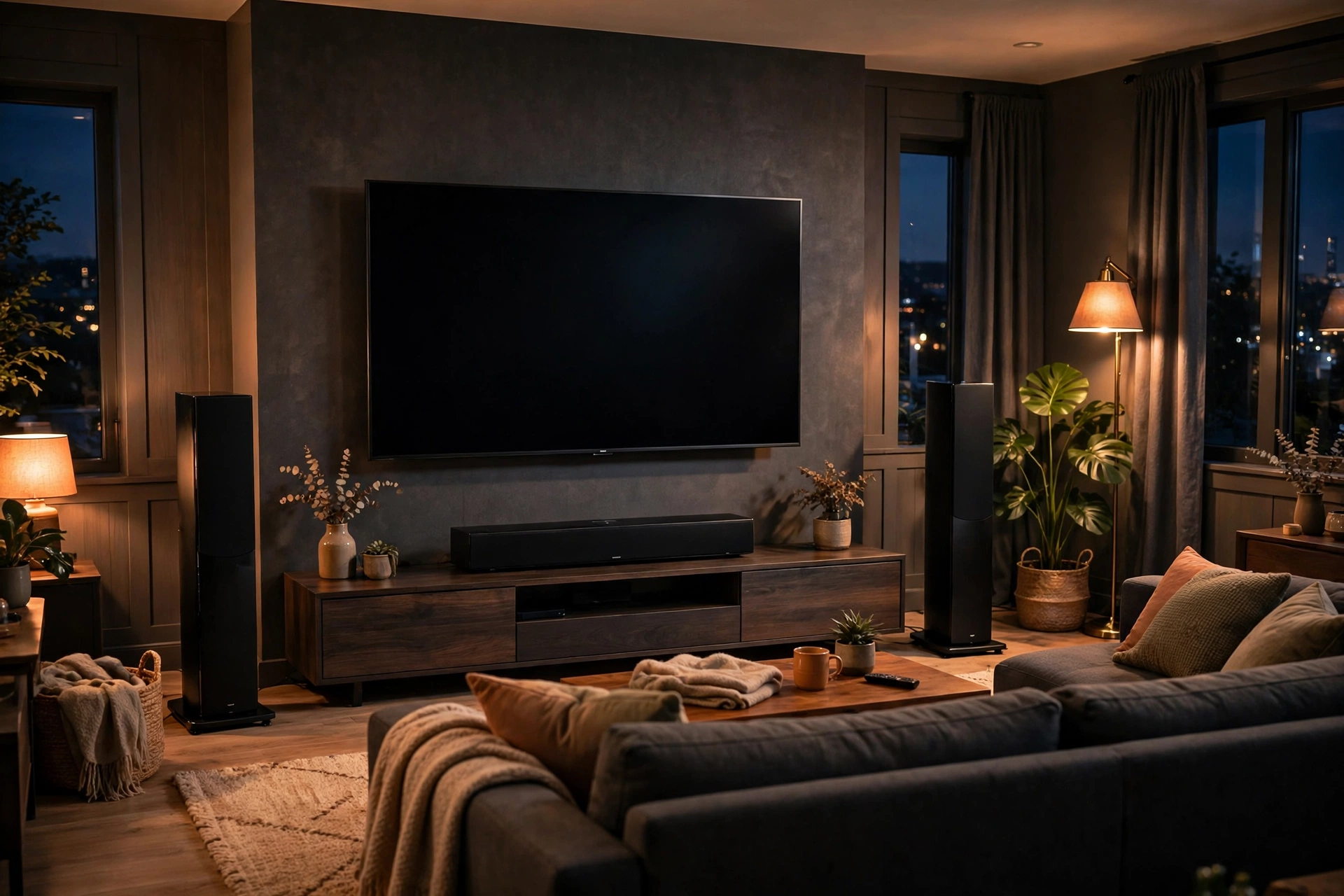
What the CLR 2002 Is
The CLR 2002 is a center/left/right loudspeaker from Definitive Technology, a Maryland-based speaker company. According to its owner’s manual, it is a compact, high-definition loudspeaker designed for high-quality audio and video systems, and it can serve as a center channel speaker or as a left and right main speaker in a surround or stereo setup. Its low profile and wide range made it a popular choice for the center position, where it carries movie dialogue and the bulk of a film’s soundtrack.
It is also magnetically shielded, which mattered when it was made: older CRT televisions could be damaged by a speaker’s magnets, so center speakers of that era were built to sit directly on or beside the TV. With a modern flat-panel TV that concern is gone, but the shielding does no harm.
The Specifications That Matter
The figures below come from the CLR 2002 owner’s manual, not from a review or a sales listing:
- Driver complement: two 14 cm (about 5.5-inch) cast-basket bass-midrange drivers, plus a 25 mm (1-inch) pure aluminum dome tweeter arranged in a D’Appolito configuration — tweeter between the two midrange drivers, which helps keep dialogue clear across a wide seating area.
- Frequency response: 30 Hz to 30 kHz.
- Efficiency: 91 dB.
- Impedance: compatible with 8 ohms.
- Recommended amplification: 20 to 250 watts per channel.
- Dimensions: roughly 22 inches wide, under 7 inches tall, and 12 inches deep — a long, low box built to sit under or over a television.
- Adjustable feet: supplied with the speaker, so it can be angled up or down to point directly at the listeners.
That 91 dB efficiency is worth noting: the speaker does not need a huge amplifier to play loudly, which makes it a forgiving match for the modest receivers most people already own. The full manual, including placement diagrams, is available from Definitive Technology’s documentation — the CLR 2002 owner’s manual is the primary source for the specifications above.
Where It Fits in a Home Theater
In a surround system, the center channel does the heavy lifting. It carries nearly all the dialogue in a film, along with much of the on-screen action. A weak center speaker is why dialogue sounds muffled while explosions sound fine — the problem is usually the speaker, not the movie mix.
The CLR 2002 was designed for this job. Its horizontal layout and dual midrange drivers spread dialogue evenly across the seating area, so the person sitting off to the side hears the same words as the person in the middle. Place it directly above or below the TV, as close to the screen’s center as your furniture allows, and use the adjustable feet to angle it toward ear height at your seat. The manual also notes it can be used vertically, or as a pair flanking the TV, if your room demands it.
If you already have Definitive Technology main speakers, the CLR 2002 will generally match them tonally, since it was built to pair with the company’s speakers of the same era. If your main speakers are another brand, it can still work — but listen for a mismatch in tone when sound moves across the front of the room.
Buying One Used: The Checklist
Because the CLR 2002 is sold used, condition is everything. Run through this checklist before paying:
- Test both midrange drivers and the tweeter. Play music with clear vocals and listen for buzzing, rattling, or a driver that is silent. A blown driver is the most common fault in a speaker this age.
- Inspect the driver surrounds. The flexible rings around the drivers can dry out and crack over time. Press them gently — they should feel supple, not stiff or crumbling.
- Check the cabinet. Look for swelling, water damage, or corners that have been knocked. A damaged cabinet affects sound and is a sign of rough handling.
- Confirm the feet are included. The adjustable feet are part of the design — without them, angling the speaker toward your seat is difficult. Ask the seller before you collect it.
- Ask about the speaker’s history. How long did the seller own it, and was it driven hard? There is no way to verify the answer, but a seller who cannot answer at all is a warning sign.
- Compare with the manual’s specifications. A seller claiming different driver sizes or power handling from the manual is either mistaken or selling a different model — check the badge and the rear label.
Price varies widely with condition and location, so this article states no price: check recent sold listings for the same model, and walk away from any seller who will not let you test the speaker first.
Setting It Up Right
Once it is home, a few setup steps make the difference between a speaker that sounds good and one that sounds great:
- Angle it at your ears. Use the adjustable feet so the tweeter points at seated ear height. A center speaker firing at your knees or over your head loses clarity.
- Keep it clear of the wall behind it. A few inches of space behind the cabinet is enough — the speaker is not designed to be jammed into a closed shelf.
- Let your receiver calibrate it. Run your receiver’s automatic calibration, then check the center channel level yourself. Dialogue should be clear at normal volume without turning the center channel up far beyond the other speakers.
- Set the crossover sensibly. The CLR 2002 reaches down to 30 Hz on paper, but in a real room it works best with a subwoofer handling the deepest bass. A crossover around 60 to 80 Hz is a reasonable starting point — adjust by ear from there.
Who Should Buy It — and Who Should Skip It
The CLR 2002 suits a listener who wants a capable center channel for a modest price, already owns a receiver in the 20 to 250 watt range, and does not mind buying used. It is a particularly good match if your main speakers are Definitive Technology models from the same era.
Skip it if you want a warranty, if you need a speaker that fits a very shallow shelf — at 12 inches deep it needs real space — or if you cannot test the unit before buying.
If you enjoy researching older technology carefully before you buy, the same check-first approach works for very different purchases — our guide to evaluating Calion Technologies business software applies the same discipline of verifying claims before spending money.
Frequently Asked Questions
Is the Definitive Technology CLR 2002 still a good speaker?
Yes, in good condition. Its specifications — dual 14 cm drivers, a 1-inch aluminum dome tweeter, 91 dB efficiency — remain respectable for a center channel. Condition matters more than age: a well-kept unit outperforms a neglected newer speaker.
Can the CLR 2002 be used as a left or right speaker?
Yes. The owner’s manual states it can be used as a left and right main speaker in home theater and stereo systems, placed vertically or horizontally. It is not limited to center-channel duty.
What amplifier power does it need?
The manual recommends 20 to 250 watts per channel. Most modern AV receivers fall comfortably in that range, and the speaker’s 91 dB efficiency means it plays loudly without demanding a powerful amplifier.
Does it work with a modern flat-panel TV?
Yes. Its magnetic shielding was designed for older CRT televisions, which are sensitive to speaker magnets. A modern flat-panel TV is unaffected, and the speaker works exactly the same way.
Final Thoughts
The CLR 2002 is a reminder that good speaker engineering does not expire on a schedule. It was built to do one job — make dialogue clear — with a wide, low cabinet, a tweeter between two midrange drivers, and feet that let you aim it at your seat. Bought carefully and tested before payment, it can still anchor a home theater for far less than a new equivalent. Bought blind, it can be a box of worn drivers.