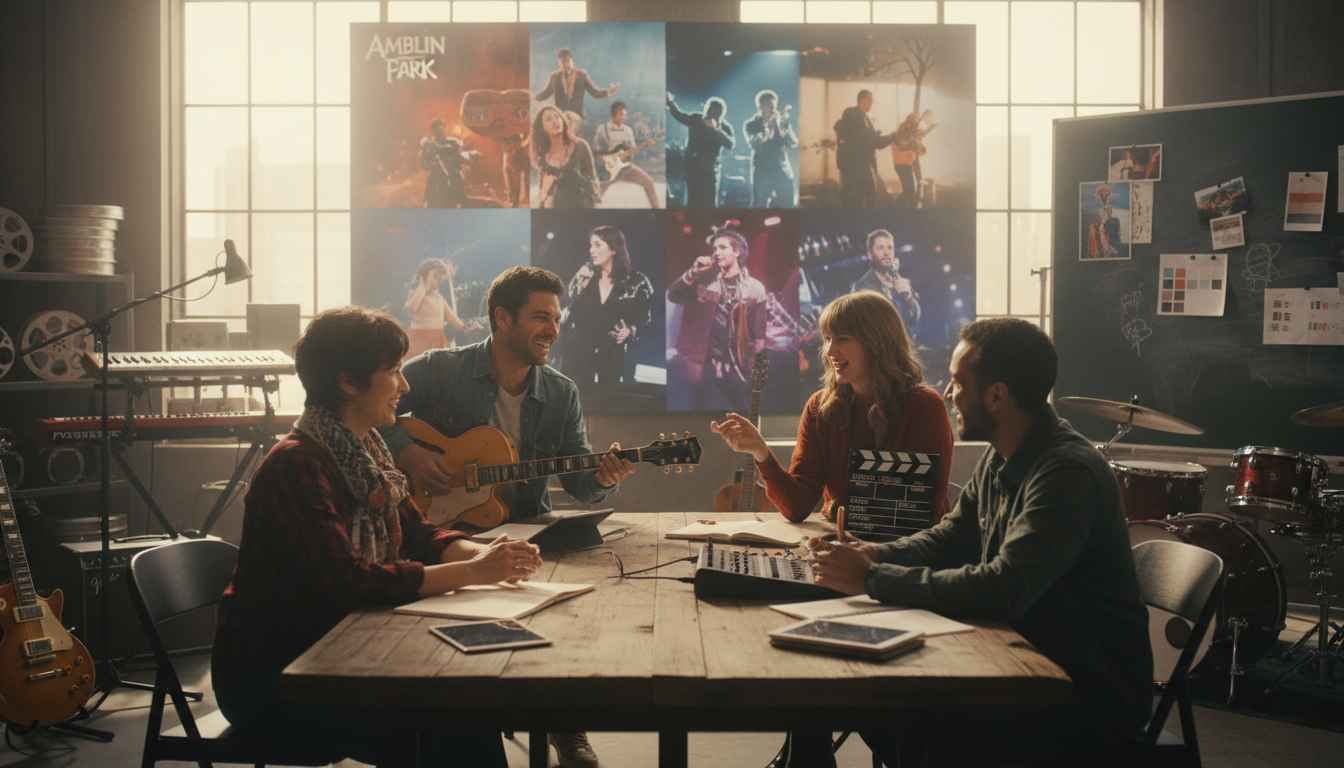
If you love both movies and music, a headline promising a grand partnership between Amblin Entertainment and Universal Music sounds thrilling: the studio behind some of cinema’s most beloved stories joining forces with one of the world’s biggest music companies. Before you get carried away, though, it is worth asking a simpler question — is that partnership actually a thing? The honest answer is more interesting than the hype, because the real connections between Amblin and the Universal family, and the real ways film and music work together, explain a lot about the entertainment you already enjoy.
First, Clear Up the Name Confusion
The biggest source of confusion is the word “Universal.” Universal Pictures and Universal Music Group are not the same company. Universal Pictures is the film studio owned by NBCUniversal (part of Comcast). Universal Music Group is a separate, standalone music company. They share a historic name and a distant corporate ancestry, but today they are run independently. So a story that treats “Universal” as one giant entity making films and signing pop stars is already oversimplifying.
The Real Amblin–Universal Relationship
Amblin Entertainment is the production company co-founded by Steven Spielberg, known for films from E.T. the Extra-Terrestrial to Ready Player One. Its real link to Universal is with Universal Pictures, not Universal Music: when Amblin Partners was formed in 2015, it struck a distribution deal under which its films would be marketed and distributed by Universal Pictures or its specialty label Focus Features, and Universal later took a minority equity stake in the company, with a renewed multi-year distribution partnership following. That is a substantial, real relationship — it is about getting films into cinemas, not about co-owning a music label. You can read the outline of that history on the Amblin Partners page, which records the distribution deal and the equity stake.
How Film and Music Actually Collaborate
That does not mean film and music never meet — they meet constantly, just through deals rather than mergers. A film’s music usually comes from three directions. A composer writes the original score. A music supervisor licenses existing songs, negotiating with record labels and publishers for the right to use them. And a soundtrack album is released, often by a label, timed to the film’s release. Amblin itself signed a music publishing deal with BMG in 2017 covering music from its films and television series — again, a publishing arrangement, not a merger with a record label. When a song from a film becomes a hit, that is usually licensing and marketing working well, not two companies becoming one.
Why the Hype Gets Ahead of Reality
Entertainment coverage loves a “game-changer” narrative, and cross-industry stories are easy to inflate: a shared corporate ancestor becomes a “partnership,” a soundtrack deal becomes a “revolution,” and speculation about future projects is reported as fact. The tell is usually vague language — “sources say,” “set to,” “could soon” — with no named deal, no press release, and no specific film or album attached. When you see those signs, treat the story as a rumour, not an announcement, and wait for the companies themselves to confirm it.
What Fans Can Genuinely Look Forward To
None of this makes the film-music crossover boring. Soundtracks remain one of the most powerful ways a film lives on after the credits: a great song can carry a scene into playlists for years, and artists regularly gain new audiences from a well-placed track. Studios and labels also cross-promote in smaller, real ways — music videos shot like short films, live performances tied to premieres, and composers whose scores get concert tours. How visual art crosses into mainstream entertainment shows a similar pattern in another medium: creative worlds borrow from each other constantly, without needing to merge.
Frequently Asked Questions
Are Amblin Entertainment and Universal Music partners?
No formal partnership between Amblin Entertainment and Universal Music Group has been announced. Amblin’s documented Universal relationship is with Universal Pictures, the film studio, through distribution and equity arrangements.
Is Universal Pictures the same as Universal Music?
No. They share a historic name but are separate companies today: Universal Pictures sits within NBCUniversal, while Universal Music Group is an independent listed music company.
How does music end up in a film, then?
Usually through a composer hired for the score, songs licensed from labels and publishers by a music supervisor, and a soundtrack album released around the film — three separate deals, not one corporate merger.
Final Thoughts
The Amblin–Universal story is a useful reminder to separate the exciting headline from the actual deal. Amblin’s real partnership with Universal Pictures has already delivered years of films to cinemas, and the everyday collaboration between film-makers and the music industry — scores, licensed songs, soundtracks — is where the magic you actually hear on screen comes from. Enjoy the crossover, just check which Universal is in the headline first.