
When you place a trade on a modern brokerage app, the tap that confirms your order is the last step in a long chain of technology. Behind it sit market-data feeds, order-routing engines, risk checks, compliance systems and security controls — all of which the broker had to design, build and keep running. Understanding how brokers develop tools for advanced trading efficiency explains why some platforms feel fast and reliable while others feel slow, opaque or fragile, and it helps you judge a broker by what actually matters rather than by its marketing.
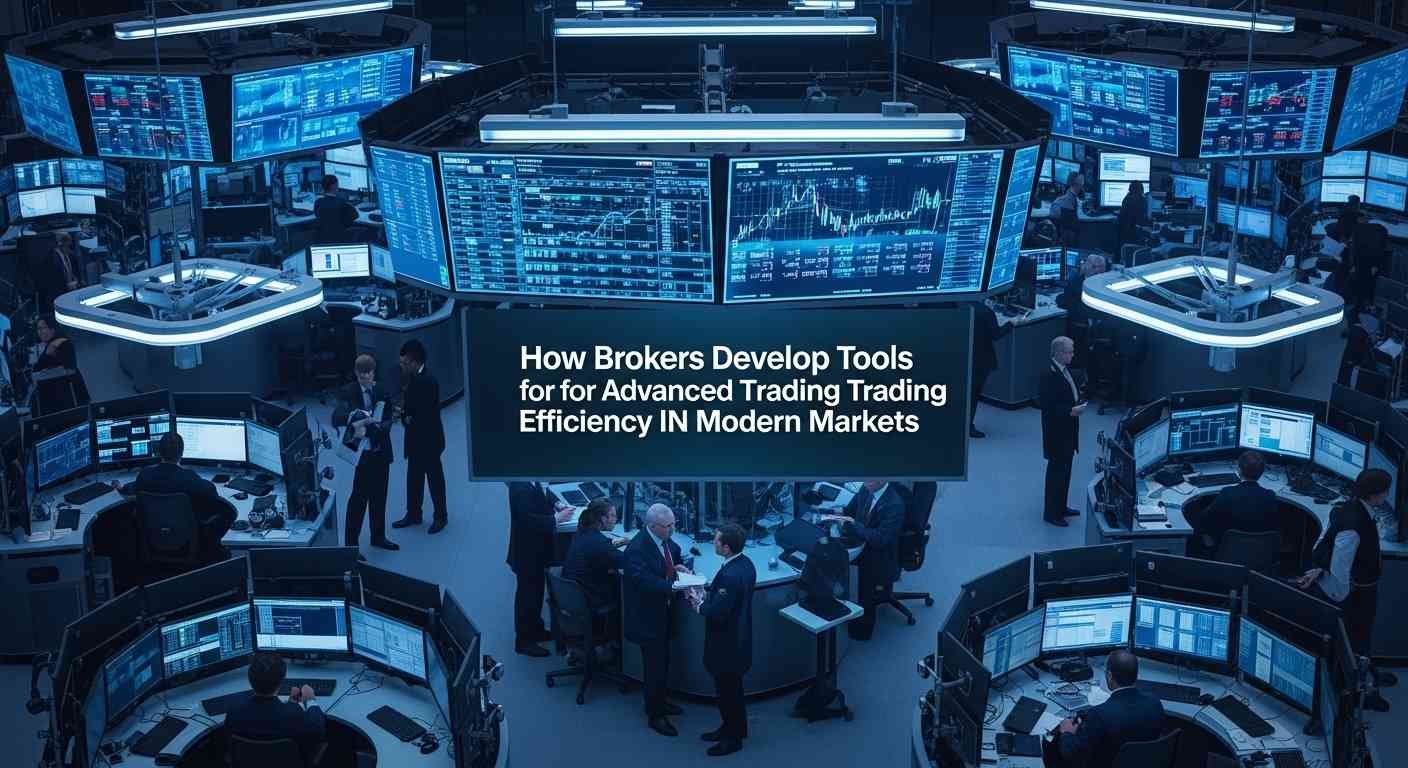
It Starts with Market Data
Every trading tool begins with data: live prices, order-book depth, news and corporate actions, delivered in real time. Brokers buy data from exchanges and data vendors, then build pipelines to clean it, normalise it across venues, and push it to traders’ screens with as little delay as possible. A chart that lags the market by seconds is worse than useless for an active trader, so data engineering — not screen design — is usually the first and most expensive part of building a trading platform.
Good platforms also make their data honest: they show you where a price comes from, whether a market is open or closed, and what a quote actually represents. If a platform hides that context, treat it as a warning sign, not a feature.
Order Routing: Getting Your Trade to the Right Place
Once you place an order, the broker’s routing engine decides where it goes. In many markets, the same asset trades on several venues at slightly different prices, so a smart router compares venues, weighs price against speed and likelihood of a fill, and splits or routes the order accordingly. The goal is not simply speed — it is the best achievable outcome for the order as a whole, balancing price improvement, fill probability and cost.
This is also where conflicts of interest can appear. Some brokers receive payments for routing orders to particular venues, a practice known as payment for order flow, which is permitted in some jurisdictions and banned in others. A trustworthy broker discloses its routing practices and execution quality in plain language; if you cannot find that disclosure, ask for it before you commit significant money.
Risk Controls That Protect Both Sides
Behind every order sit risk checks that run in milliseconds: does the account hold enough margin, does the order breach a position limit, does it look like an error (a fat-finger trade) or suspicious activity? These controls protect the trader from catastrophic mistakes and protect the broker — and, by extension, other clients — from a single account’s failure cascading through the system.
Well-built platforms make these controls visible rather than mysterious: margin requirements shown before you trade, clear warnings when leverage is high, and order confirmations that state exactly what you are about to do. Tools that hide risk behind a single “trade” button are not simpler — they are less safe.
Compliance Is Built In, Not Bolted On
Regulation shapes every part of a broker’s technology. Licensing rules differ by jurisdiction and impose requirements on capital reserves, segregation of client funds, reporting, and audit trails. Modern brokers build compliance into their systems from the start: identity verification, anti-money-laundering checks, transaction monitoring and record-keeping run as automated workflows alongside the trading engine, rather than as manual processes added later.
For traders, the practical point is simple: check that a broker is licensed by a recognised regulator in your jurisdiction, and that client funds are held in segregated accounts. Those two facts matter more than any feature list. This article is general information only, not financial advice, and nothing here should be read as a recommendation of any particular broker or trading strategy.
Testing, Security and the User Experience
Before a new tool reaches clients, it goes through testing that most users never see: simulated markets, stress tests under extreme volatility, and staged rollouts to small groups of users. The best brokers also run “chaos” exercises — deliberately breaking parts of the system — to make sure a failure in one component does not take down the whole platform.
Security follows the same logic. Two-factor authentication, encryption, fraud monitoring and regular security audits are now baseline expectations, not premium features. And the user experience itself is part of the engineering: a clean order ticket, clear fee disclosure, and a mobile app that works under pressure are not cosmetic details — they are what prevent costly mistakes when markets move fast.
Trading tools sit within the wider world of personal finance, and the same discipline — checking claims, reading the fine print, and preferring transparency over hype — applies across it. Our general finance guide covers the basics of approaching financial topics with that mindset.
FAQ: How Brokers Develop Trading Tools
What matters most in a broker’s trading platform?
Reliable market data, transparent order routing, visible risk controls, and a regulator licence with segregated client funds. Speed matters, but it is only one part of execution quality — price improvement and fill reliability matter at least as much.
Why do some brokers offer “free” trading?
Because they earn money elsewhere — from payment for order flow where it is permitted, from interest on cash balances, from margin lending, or from premium services. “Free” describes the commission line, not the total cost; always look at spreads, fees and execution quality together.
How can I check whether a broker is properly regulated?
Look up the broker’s licence on the regulator’s own website in your jurisdiction, confirm the legal entity name matches, and check whether client funds are segregated. If you cannot verify a licence independently, do not fund the account.
Do faster tools guarantee better trading results?
No. Better tools reduce friction and errors, but they do not remove market risk, and no tool can guarantee profits. Be sceptical of any platform that implies otherwise.
Final Thoughts
The best brokerage tools are the ones you barely notice: prices you can trust, orders that go where they should, risk warnings that arrive before mistakes, and a platform that stays up when markets get wild. Those qualities come from unglamorous engineering — data pipelines, routing logic, risk controls and compliance systems — not from slogans. Judge a broker on that engineering, verified through its regulator and its disclosures, and you will choose far better than any feature comparison alone would suggest.