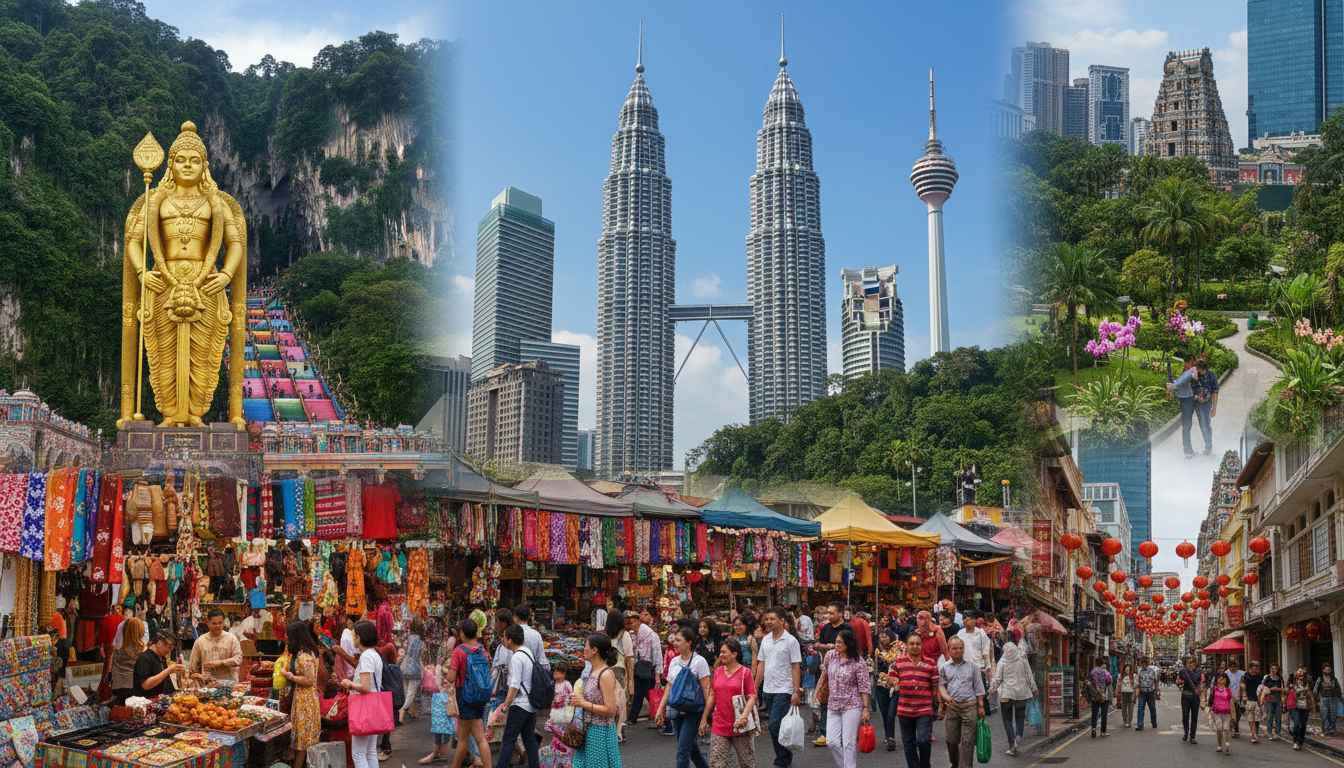
Picture this: you step out of a cool, air-conditioned train station into warm, scented air, and within minutes you are standing beneath two gleaming towers, hearing five languages on one street and smelling satay smoke drifting from a hawker stall. That is Kuala Lumpur in a nutshell — a city where Malay, Chinese, Indian and colonial histories live side by side, and where a morning in a limestone cave temple can end with dinner under neon lights. If you are planning a first visit, this guide picks out the places that actually repay your time, and shows how to fit them together without rushing.
Start With the Icons: Petronas Twin Towers and KL Tower
No first trip to Kuala Lumpur is complete without the Petronas Twin Towers. The twin spires and the Skybridge between them are the city’s signature sight, and the view from the observation deck puts the whole sprawl — highways, green hills and high-rises — into perspective. Go early in the day if you can, when the light is soft and the queues are shorter, and allow time afterwards to wander the park and fountains at the towers’ feet.
For a different angle, head to the Menara Kuala Lumpur (KL Tower). Its observation deck looks back across the city towards the Twin Towers, which makes it the better sunset choice: you watch the towers light up while the city below switches on. If heights are not your thing, the base of either tower still rewards a visit — the surrounding streets are full of food courts, shops and street life.
Batu Caves: A Climb Worth the Effort
Just north of the city centre, Batu Caves is one of the most memorable half-days in Kuala Lumpur. A giant golden statue guards the foot of a long, colourful staircase that climbs to a limestone cave temple. Take the steps slowly — the monkeys here are bold, so keep food, loose bags and sunglasses tucked away — and pause halfway for the view back over the city. Inside, the main cave opens into a high, echoing chamber with shrines tucked into its corners. Wear shoes you can climb in and modest clothing, out of respect for a working Hindu temple, and bring water: the climb is steeper than it looks in photographs.
Old Kuala Lumpur: Merdeka Square, Sultan Abdul Samad and Central Market
The city’s colonial heart is the best place to understand how Kuala Lumpur grew from a tin-mining settlement into a capital. Around Merdeka Square you will find the Sultan Abdul Samad Building with its copper domes and clock tower, the old railway station, and wide lawns where locals gather in the evening. It is an easy area to explore on foot, and it pairs naturally with Central Market, a short walk away, where craft stalls, batik, pewter and food stalls give you a gentler introduction to Malaysian shopping than the big malls.
From here, walk into Chinatown’s Petaling Street for its market buzz and hawker food, and set aside an evening for Brickfields, the city’s Little India, where sari shops, banana-leaf restaurants and flower garlands fill the streets. These two neighbourhoods are the clearest proof of the city’s multiethnic character — and the best places to eat well for very little.
Museums That Make the History Make Sense
If you want the stories behind the sights, spend an hour or two in a museum. The Islamic Arts Museum Malaysia is widely regarded as one of the finest of its kind in Southeast Asia, with calligraphy, textiles, ceramics and mosque models laid out in calm, airy galleries — a welcome break from the heat outside. The National Museum (Muzium Negara) covers Malaysia’s story from early kingdoms to independence, and gives context that makes the colonial buildings and temples you have already seen feel much more meaningful. Both are easy to reach by train, and both are worth prioritising over a third shopping mall.
Green Spaces: KLCC Park and Perdana Botanical Gardens
Kuala Lumpur is greener than its skyline suggests. KLCC Park, at the foot of the Twin Towers, is the city’s front garden: jogging paths, a lake with evening fountain shows, and playgrounds that make it a natural rest stop for families. For a longer, quieter escape, head to Perdana Botanical Gardens (Lake Gardens), where orchid and hibiscus gardens, shaded paths and lakeside benches offer a slow afternoon away from traffic. Go in the morning, before the day’s heat builds, and bring insect repellent.
Evenings in Bukit Bintang
When the heat eases, Bukit Bintang comes alive. This is the city’s main shopping and entertainment district, where mega-malls sit beside open-air food streets like Jalan Alor — a long lane of hawker stalls serving grilled seafood, noodles, satay and fresh fruit juices late into the night. Even if you do not plan to shop, an evening stroll here, dinner at a hawker table and a wander through the night market stalls is one of the most enjoyable ways to end a day in the city.
Planning Your Visit: Getting Around and When to Go
Kuala Lumpur is easy to navigate without a car. The LRT and MRT lines cover most sights, ride-hailing apps fill the gaps, and the city centre is walkable in short stretches — though pavements can be uneven, so comfortable shoes matter. The city is tropical all year, with warm days and the chance of a sharp afternoon downpour in any month; pack a light rain jacket, drink plenty of water, and plan temple and outdoor visits for the morning, saving malls and museums for the hottest or wettest hours. Most visitors find three full days enough for the highlights above, with a fourth day for a day trip to Malacca or the Genting Highlands if time allows. If you are building a wider Southeast Asia itinerary, our guide to the top 15 places to visit in Singapore pairs naturally with a Kuala Lumpur stop, and our round-up of the 25 best places to visit in Asia helps you place the city in a longer journey.
FAQ: Kuala Lumpur Places to Visit in Malaysia
How many days do you need in Kuala Lumpur? Three full days cover the main sights comfortably — towers, Batu Caves, the old centre, museums and an evening in Bukit Bintang — without rushing. Add a day for a day trip if you have it.
Is Kuala Lumpur good for families? Yes. The parks, the Twin Towers observation deck, Central Market and the food streets all suit children, and most attractions are easy to reach by train. Keep days short in the heat, with a pool or mall break in the afternoon.
What should you wear to temples and mosques in Kuala Lumpur? Cover shoulders and knees, and carry a scarf or shawl. Some places of worship provide coverings at the entrance, but bringing your own avoids a wait.
Do you need a car in Kuala Lumpur? No. Trains, ride-hailing and walking cover the central sights well. A car only becomes useful for day trips outside the city.
Final Thoughts
Kuala Lumpur rewards travellers who mix the obvious with the everyday: a tower view in the morning, a temple climb before lunch, a museum when the rain comes, and a hawker dinner when the lights come on. Do not try to see everything — pick one icon, one historic quarter and one green space each day, and leave room for the unplanned street, stall or conversation that usually becomes the story you tell afterwards.