You step off the subway at Sinyongsan Station, and before you even reach street level you hear it — a BTS track drifting from a café speaker, a teenager clutching a lightstick, a birthday banner for an idol stretched across a storefront. This is what a K-pop pilgrimage in South Korea feels like: the music you have loved from thousands of miles away is suddenly the background noise of everyday life. Seoul is the beating heart of the K-pop industry, and visiting its landmarks turns years of streaming, fan cams, and comeback teasers into something you can walk through.
But here is the honest truth most fan guides skip: agency buildings are offices, not theme parks. Knowing exactly what you can visit — and what you should skip — is the difference between a magical trip and a wasted afternoon. Here are the places that genuinely deserve a spot on your itinerary.
The Agency Buildings: What You Can Actually Visit
Seoul’s major entertainment agencies each have a headquarters worth a photo stop, but manage your expectations: you can photograph the exteriors, not tour the offices.
HYBE (Yongsan-gu). The HYBE headquarters at 42 Hangang-daero, near Sinyongsan Station on Line 4, is the home of BTS, SEVENTEEN, and TOMORROW X TOGETHER. Fans gather at the plaza for photos, especially around comebacks and birthdays when support banners appear. One important update: the HYBE Insight museum that once occupied the building’s basement floors ended operations in January 2023, so do not travel there expecting museum admission — it is an exterior photo stop only. This current guide to the HYBE Yongsan area confirms the museum’s closure and lists the fan cafés nearby.
SM Entertainment (Seongsu-dong). SM’s public activity has shifted to the Seongsu area since its old SMTOWN COEX Artium in the Gangnam COEX Mall closed. The Seongsu neighborhood itself — trendy cafés, galleries, and idol-adjacent pop-ups — is worth half a day on its own.
JYP Entertainment (Songpa-gu, near Olympic Park). Home of TWICE, Stray Kids, and ITZY. There is no public store or open lobby, so photograph the building from the street and move on; nothing about idol sightings is scheduled or guaranteed.
YG Entertainment (Hapjeong-dong, Mapo-gu). The offices of BLACKPINK, TREASURE, and BABYMONSTER sit near Hapjeong Station. The building is closed to visitors, but the surrounding Hongdae area — fan-run cafés, record shops, and street food — makes the trip worthwhile.
Music Shows: Watch Idols Perform Live
The single most electric K-pop experience in Seoul is watching a music show recording in person. Music Bank records at KBS Hall in Yeouido with a live audience on Friday mornings, and fan-club members and general fans can apply for seats through official channels — check the KBS ticketing notice well before your trip, because popular episodes fill fast. Similar shows record weekly at studios in the Sangam area.
Beyond weekly shows, Seoul’s big concert venues host the tours you have only watched on YouTube: the Gocheok Sky Dome, the KSPO Dome, and Jamsil Stadium regularly fill with tens of thousands of fans. Book through official ticketing platforms only, and never buy from scalpers — counterfeit tickets are a real problem, and venues do verify.
K-Star Road and the Shopping Districts
In Gangnam’s Apgujeong Rodeo area, K-Star Road is lined with colorful “GangnamDol” statues — stylized figures of famous idols placed by the district office. It is a free, walkable photo trail through one of Seoul’s most fashionable neighborhoods, and the surrounding streets are full of the beauty and fashion culture K-pop helped make famous worldwide.
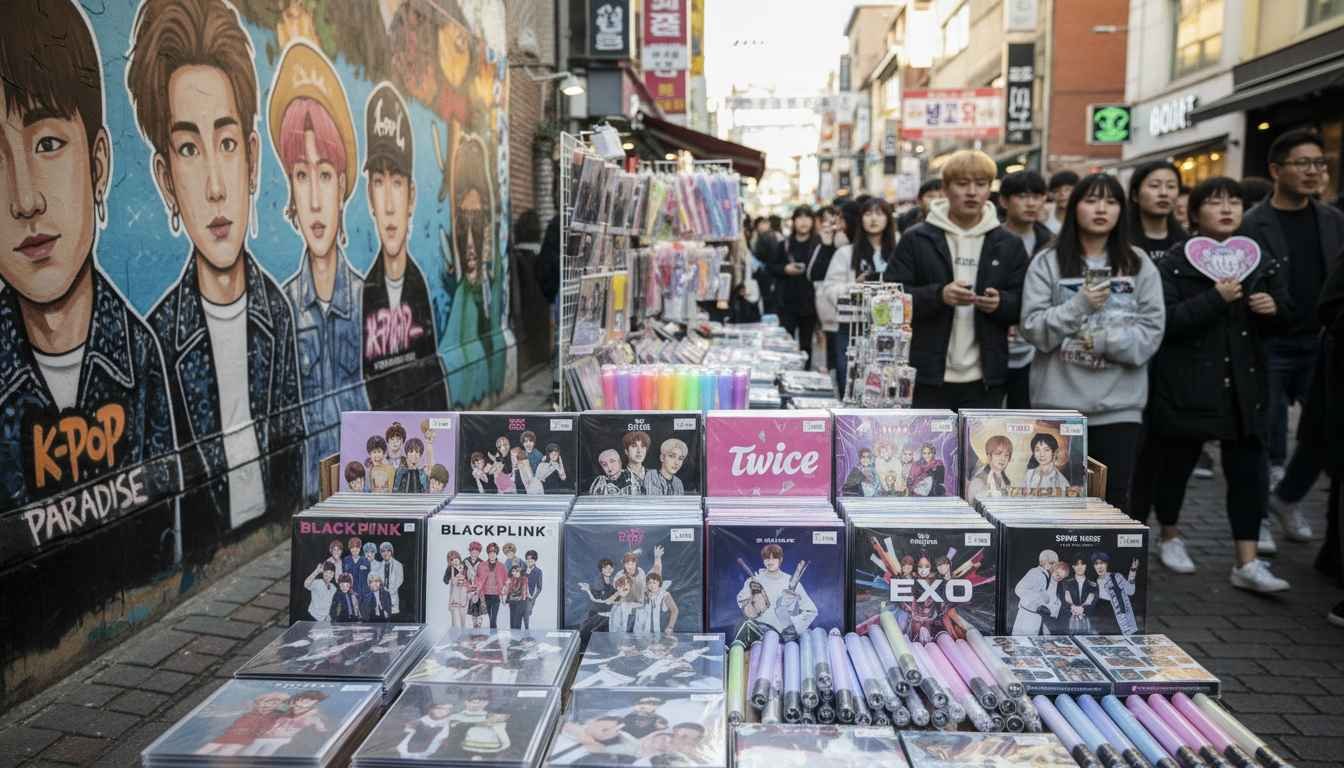
For official merchandise, head to Myeongdong, where album shops sell current releases, lightsticks, and photocards — many shops stock limited editions you will not find online. Hongdae’s underground shopping streets and the AK Plaza area are the backup plan if Myeongdong is picked clean. Set a budget before you go; photocard trading culture makes it dangerously easy to overspend.
Beyond Seoul: Busan’s K-Pop Scene
Busan, South Korea’s coastal second city, deserves at least a day trip. It hosts the annual Busan One Asia Festival each October — a multi-day K-pop concert and cultural event that draws fans from across Asia — and the city’s beachside neighborhoods have a growing calendar of smaller fan events and concerts that feel more intimate than Seoul’s stadium shows. The high-speed KTX train from Seoul takes under three hours.
Planning Tips for a K-Pop Trip
Timing matters. April brings cherry blossoms and comfortable walking weather; October and November bring autumn foliage plus the concert and festival season. Summer is hot and humid, and many idols tour internationally rather than performing domestically.
Practically: get a T-money transit card on arrival, download Naver Map (Google Maps is limited in Korea), and learn a few Korean phrases — fan café staff appreciate the effort. Most importantly, follow fan etiquette: never stake out agency parking lots, never follow idols’ cars, and never block entrances. The agencies and fandoms both ask fans not to do this, and it is the fastest way to ruin the community atmosphere. If you are building a longer itinerary, explore more destinations across Asia to pair with your Korea trip.
Frequently Asked Questions
Can you go inside the K-pop agency buildings? No. HYBE, SM, JYP, and YG headquarters are working offices closed to the public. Visit for exterior photos and the surrounding fan neighborhoods instead.
When is the best time to visit South Korea as a K-pop fan? October is the sweet spot: autumn foliage, the Busan One Asia Festival, and peak concert season. April is the runner-up for cherry-blossom season and pleasant weather.
How do fans get tickets to music shows like Music Bank? Through official channels — KBS publishes ticketing notices for Music Bank recordings, and fan clubs often get priority. Apply early, arrive on time, and never trust resold tickets.
Final Thoughts
A K-pop trip to South Korea works best when you balance the pilgrimage stops with the country itself. Photograph the HYBE building in the morning, eat your way through Gwangjang Market at lunch, and end the night at a concert you will talk about for years. The agencies built the music, but Seoul — its streets, its food, its fans — is what makes the trip unforgettable.