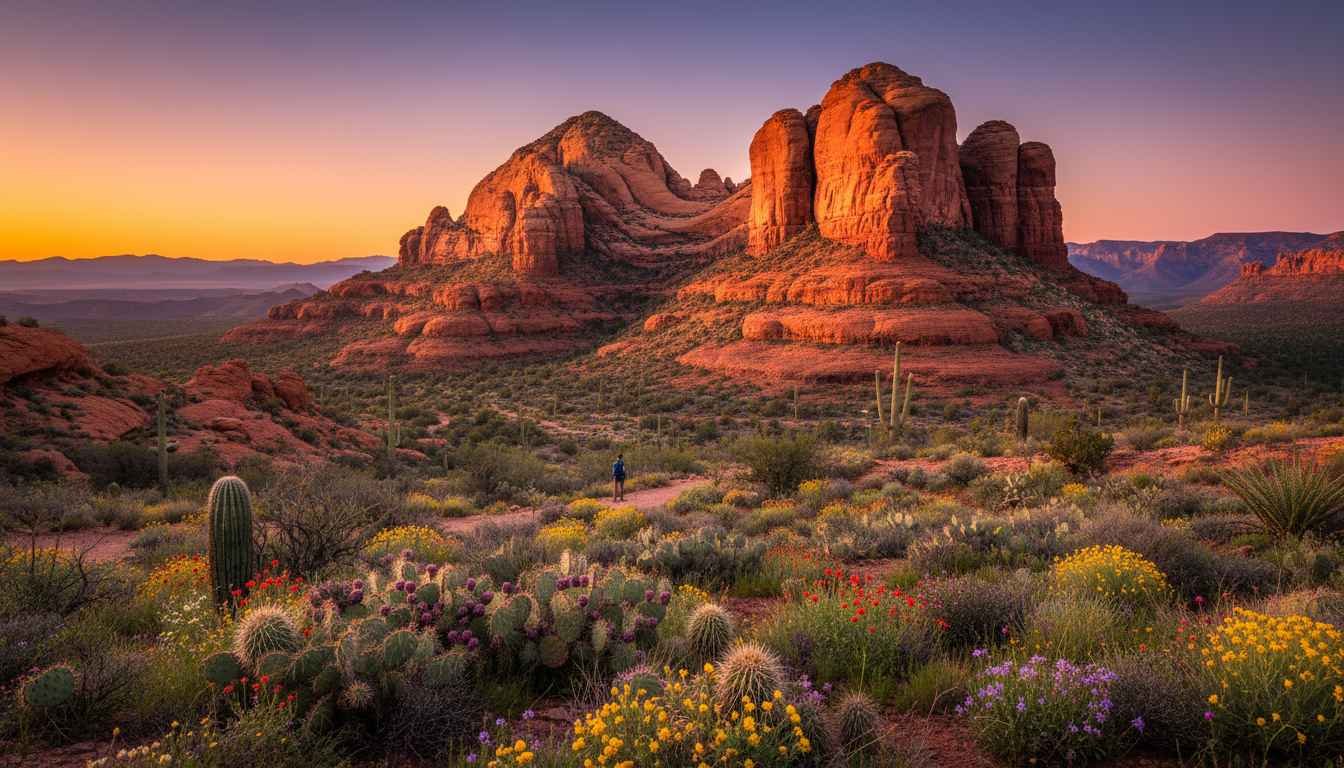
There is a particular light in the American Southwest at sunrise, when red rock turns gold and the desert is still cool enough to walk in comfortably. This is a region built for road trips: long drives between big landscapes, small towns with real character, and cultures layered over thousands of years. The places to visit in the Southwest USA reward travellers who slow down, carry water, and give each landscape a full day rather than a photo stop.
Grand Canyon National Park, Arizona
The Grand Canyon is the Southwest’s unmissable sight, and the South Rim is the most accessible side for most visitors, open year-round with rim walks, viewpoints and visitor facilities. Walk a section of the Rim Trail rather than just standing at one overlook — the canyon changes character with every turn. If you hike below the rim, take the warnings seriously: the climb back up is long, steep and hot, and hiking to the river and back in a single day is not a safe plan for most people. Carry more water than you think you need, and start early.
The canyon is also a UNESCO World Heritage site, recognised for its geological and natural significance. That status is a reminder to treat it with respect: stay on marked trails, keep a safe distance from edges, and leave no trace.
Zion National Park, Utah
Zion, in southern Utah, is a canyon of a different kind — narrower, greener and more intimate than the Grand Canyon. Its red cliffs rise directly above the Virgin River, and the park’s shuttle system keeps the main canyon quiet and walkable. The Riverside Walk is an easy introduction, while the Narrows — walking in the river itself between towering walls — is unforgettable in the right conditions, when water levels and weather allow.
Angels Landing, the famous narrow-ridge hike, now uses a permit system, so check the current rules before you plan around it. If you do not get a permit, Zion has plenty of alternatives with equally fine views, including the Watchman and Canyon Overlook trails. Pack light for desert hiking — our guide on how to pack light for a two-week trip works just as well for a Southwest road trip, where every bag has to fit in the car and carry on the trail.
Monument Valley and the Desert Landscapes
Between Arizona and Utah, Monument Valley’s isolated buttes rising from flat desert are among the most recognisable landscapes in America. The valley lies within the Navajo Nation, and tours into the valley itself are led by Navajo guides — the best way to understand the place beyond its film fame, and a chance to hear its history from the people who live there. Drive the surrounding highways slowly; the desert rewards patience, and sunrise and sunset transform the same road completely.
Further south, the painted deserts and petrified forests of Arizona and New Mexico offer quieter, stranger landscapes — coloured badlands, ancient trees turned to stone, and night skies with almost no light pollution. These are places to stop, look and listen, not to rush through.
Santa Fe and Taos, New Mexico
Santa Fe and Taos, in northern New Mexico, are the Southwest’s cultural heart. Santa Fe’s adobe architecture, art galleries, museums and historic plaza make it one of America’s most distinctive small cities, with a food scene shaped by Native American, Spanish and Mexican influences. Taos, smaller and quieter, is known for its art colony history and for Taos Pueblo, a UNESCO World Heritage site and a living Native community — check current visiting information before you go, as access varies and respectful behaviour matters more here than at any ordinary attraction.
Both towns make good bases for exploring the surrounding mountains and high desert, and both reward travellers who linger: a morning in a gallery, an afternoon in a market, an evening meal of New Mexican food.
Sedona and Albuquerque
Sedona, Arizona, is famous for its red rock formations and for the vortex sites that draw spiritual seekers — whether or not you believe in them, the hiking and the scenery are real enough. Cathedral Rock and Bell Rock are popular, so start early for quieter trails. Albuquerque, New Mexico’s largest city, offers a different flavour: a historic Old Town, a long stretch of Route 66, and the Sandia Mountains rising directly behind the city. Its annual balloon festival, if your trip coincides with it, is one of the Southwest’s great spectacles.
Across the region, Native American heritage is present everywhere — in archaeological sites, cultural centres and living communities. Visit these places with the same respect you would bring to any community’s home: follow local rules, ask before photographing people, and buy directly from Native artists where you can.
Planning a Southwest Trip
Spring and autumn are usually the best seasons: warm days, cooler nights and manageable crowds. Summer brings intense desert heat, especially at lower elevations, while winter can bring snow to higher places like the Grand Canyon’s rims — beautiful, but worth planning for. Distances are long and services can be sparse, so keep fuel topped up, carry water in the car, and do not rely on phone signal in remote areas.
You will almost certainly need a car. Public transport between parks and towns is limited, and the freedom of a car is part of the experience — the ability to stop at an overlook, a roadside diner or a trailhead on impulse. For family groups, the national parks are excellent, but plan shorter hikes and shade breaks for children; our guide to the top ten places to visit with family includes national-park destinations that work well for mixed ages.
FAQ: Places to Visit in the Southwest USA
How many days do you need for the Southwest USA?
A week gives you a good introduction — for example, the Grand Canyon, Zion and Santa Fe — while ten days to two weeks lets you add Monument Valley, Sedona and a slower pace without exhausting driving days.
What is the best time to visit the Southwest USA?
Spring and autumn are generally best for hiking and driving, with milder temperatures. Summer is possible but hot in the deserts; winter is quieter but can bring snow at higher elevations.
Do you need a car in the Southwest USA?
In practice, yes. Parks, towns and viewpoints are spread far apart, and a car gives you the flexibility the region demands. Book rental cars early in peak seasons.
Is the Southwest USA suitable for families?
Yes, with planning: choose shorter trails, carry plenty of water, build in shade and rest stops, and mix park days with town days so children are not hiking in heat all day.
Final Thoughts
The Southwest is not a region to collect — it is a region to travel through slowly. Give the Grand Canyon a sunrise, give Zion a full day, give Santa Fe an unhurried evening, and let the desert between them do its quiet work. Done that way, a Southwest trip is less a list of parks and more a journey you will measure later trips against.