
Cape Town is one of those cities that seems to have everything at once: a mountain in the middle of town, beaches on two sides, a harbour full of history, and neighbourhoods whose stories run from the earliest colonial days to the struggle against apartheid and beyond. These top ten places to visit in Cape Town cover the icons and the places that explain the city — and together they make a first trip that feels complete rather than rushed.
1. Table Mountain
Table Mountain is Cape Town’s defining landmark — a flat-topped mountain that dominates the city skyline and is part of a UNESCO World Heritage site. The rotating cable car carries visitors to the summit in minutes, where walking trails and viewpoints look out over the city, the ocean and the peninsula. If you prefer to walk up, several hiking routes climb the mountain, but they are steep and exposed: start early, carry water and sun protection, and check weather conditions, as the cable car closes in high wind and cloud.
2. Robben Island
Robben Island, just off the coast, is where Nelson Mandela was imprisoned for 18 of his 27 years in prison. Ferries from the V&A Waterfront carry visitors to the island, where guided tours — often led by former political prisoners — visit the prison, the limestone quarry and Mandela’s cell. It is a sobering, essential visit, and one that explains modern South Africa better than any museum on the mainland. Book ferries well ahead, as they sell out and are weather-dependent.
3. The V&A Waterfront
The Victoria & Alfred Waterfront is the city’s harbour-side hub of shops, restaurants, markets and museums, built around working docks. It is the most tourist-friendly part of town, and a good base for an evening: the Two Oceans Aquarium and the Zeitz Museum of Contemporary Art Africa both sit here, and the harbour views at sunset are excellent. The Waterfront is also the departure point for Robben Island ferries and harbour cruises.
4. Kirstenbosch National Botanical Garden
Set against the eastern slopes of Table Mountain, Kirstenbosch is one of the great botanical gardens of the world, devoted entirely to South African plants. Its lawns, forest walks and tree-canopy walkway make it a peaceful half-day, and in summer it hosts outdoor concerts. Come in the morning for the quietest experience, and allow time to simply sit on the lawns with the mountain behind you.
5. Clifton and Camps Bay Beaches
Cape Town’s Atlantic-side beaches are among its greatest pleasures. Clifton’s four small, sheltered coves and the broader sweep of Camps Bay, backed by the Twelve Apostles mountain range, offer white sand, cold Atlantic water and sunset views. These are sunbathing and strolling beaches rather than warm swimming beaches — the Atlantic here is cold year-round — so bring a towel, sunscreen and a windproof layer for the afternoon breeze.
6. Bo-Kaap
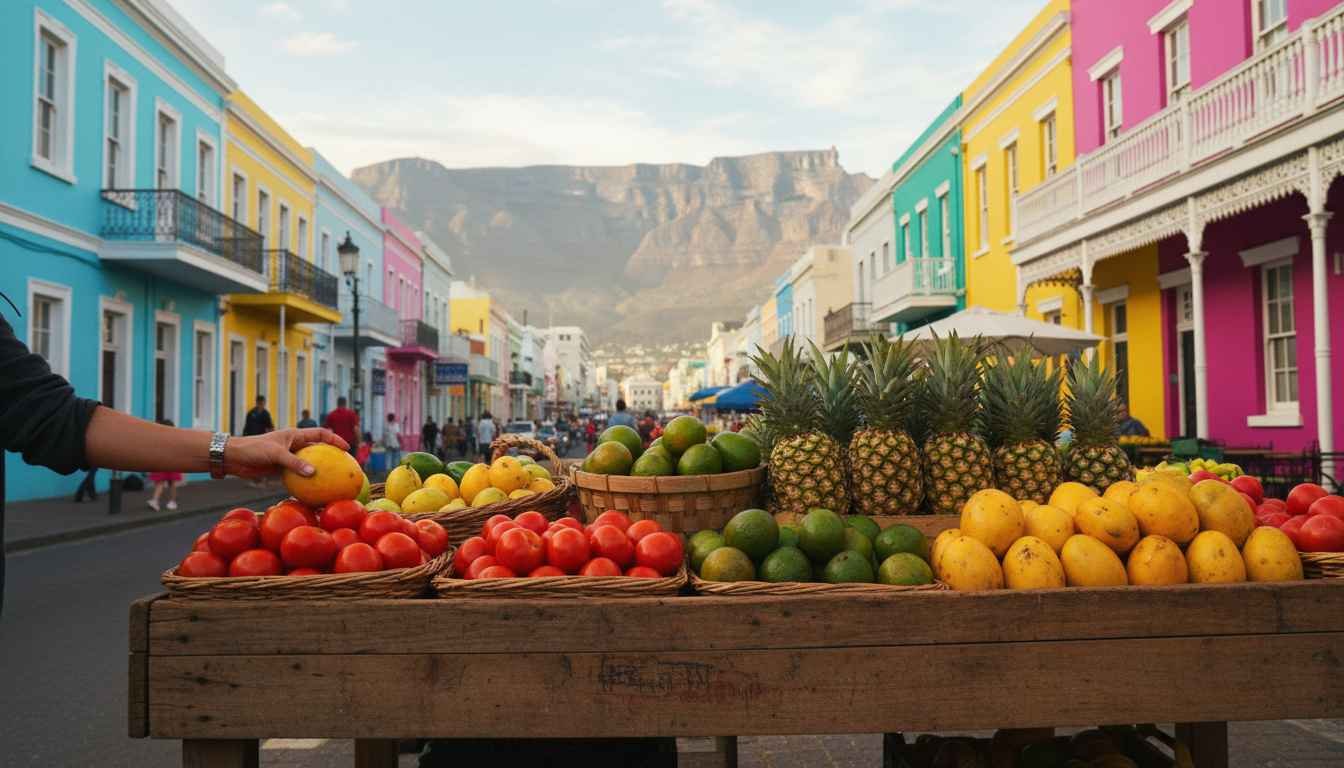
Bo-Kaap, on the slopes of Signal Hill, is famous for its brightly painted houses — but its real significance is cultural. This is the historic home of Cape Town’s Cape Malay community, whose roots reach back to enslaved people brought to the Cape in the 17th and 18th centuries. Walk its steep, narrow streets, visit the Bo-Kaap Museum, and try Cape Malay food in one of the neighbourhood’s small restaurants. Be respectful: this is a living residential neighbourhood, not a theme park.
7. District Six Museum
The District Six Museum tells the story of a vibrant, mixed community that was forcibly removed from the city centre under apartheid, its homes demolished and its people scattered. Built in a former church, the museum uses photographs, a floor map annotated by former residents, and personal stories to make that history concrete. It is a small museum with a large emotional impact, and it pairs naturally with a Robben Island visit as the two essential historical stops in the city.
8. Cape Point and the Cape of Good Hope
At the tip of the Cape Peninsula, Cape Point offers dramatic cliffs, ocean views and wildlife, within Table Mountain National Park. The famous Cape of Good Hope sign and the lighthouse viewpoint are the main draws, but the reserve’s coastal walks — and its baboons, ostriches and antelope — are equally rewarding. Most visitors come as a day trip from the city, combining Cape Point with the penguins at Boulders Beach and the coastal drive through Chapman’s Peak.
9. Boulders Beach Penguins
Boulders Beach, near Simon’s Town, is home to a colony of African penguins that nest among granite boulders and swim in the sheltered coves. Boardwalks let you watch the penguins at close range without disturbing them, and the sheltered main beach is one of the few places on the peninsula where swimming is comfortable. Visit early to avoid the midday crowds, keep your distance from the birds, and never try to touch or feed them.
10. Castle of Good Hope
The Castle of Good Hope, built by the Dutch East India Company in the late 17th century, is the oldest surviving colonial building in South Africa. Its pentagonal fortress, museums and daily key ceremony tell the story of the Cape’s earliest colonial years — a story that connects directly to the histories of Bo-Kaap and District Six elsewhere on this list. It sits close to the city centre and the Company’s Garden, making it an easy final stop that ties the city’s history together.
Planning Your Cape Town Trip
Cape Town rewards a stay of at least four or five days: the mountain, the island, the peninsula and the city’s neighbourhoods each deserve a day of their own. Summer (roughly November to March) brings the best beach weather, while winter brings rain and the famous Cape Town wind — the “Cape Doctor” — that can close the cable car. Whichever season you choose, book Robben Island ferries early, carry layers for the mountain and the coast, and leave room in your plan for the Western Cape beyond the city: Stellenbosch’s wine country and the Garden Route both make natural extensions. If you are planning a family trip, our guide to the top ten places to visit with family covers more destinations built around travelling with children, and for a first international trip, our guide to travel safety tips for first-time international travelers covers the practical basics.
FAQ: Top Ten Places to Visit in Cape Town
How many days do you need in Cape Town?
Four to five days cover this top ten comfortably: one day for Table Mountain and the city centre, one for Robben Island and the Waterfront, one for the Cape Peninsula and Boulders Beach, and a day for Bo-Kaap, District Six and Kirstenbosch.
What is the best time to visit Cape Town?
Late spring through early autumn (roughly November to March) offers the warmest, driest weather and the best beach days. Winter is cooler and wetter, but quieter and cheaper, and the mountain and museums are enjoyable year-round.
Is Robben Island worth visiting?
Yes — it is one of the most significant historical sites in South Africa, and the guided tours give it a personal dimension no book can match. Book ahead and allow a half-day including the ferry.
Can you swim at Cape Town’s beaches?
Yes, but the Atlantic water is cold. Boulders Beach is the most sheltered and comfortable for swimming, while Clifton and Camps Bay are better for sunbathing, walking and sunsets.
Final Thoughts
Cape Town’s top ten are not just a checklist — they are a story. A mountain and a prison island, a harbour and a botanical garden, beaches and neighbourhoods that carry centuries of history: together they explain why this city stays with visitors long after they leave. See them in this order, or in your own, but see them all — and leave a day spare for the peninsula road, where the city’s story opens out into the wider Cape.