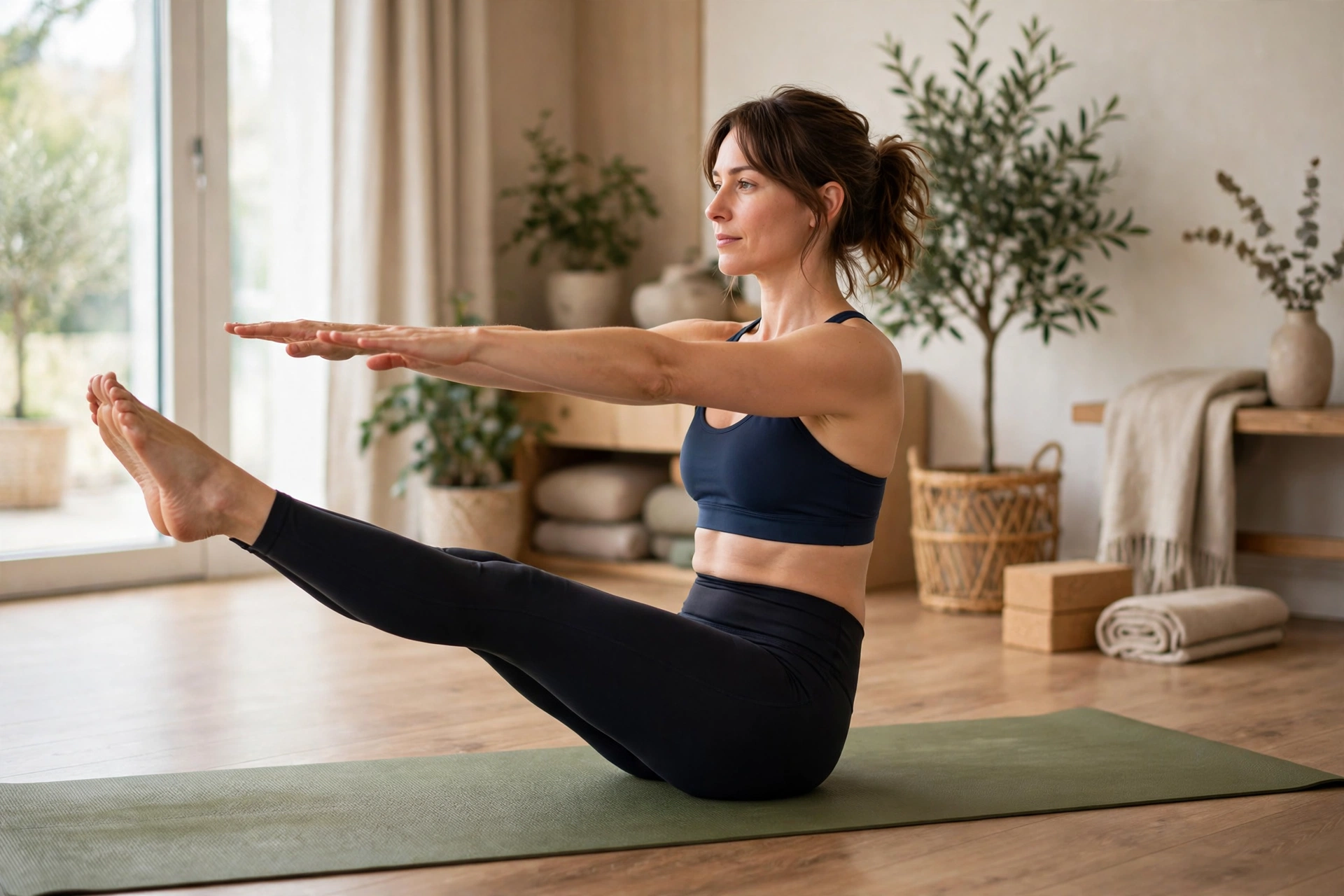
You have been meaning to start exercising for weeks. The gym feels like a big step, the equipment looks expensive, and your schedule never seems to have a free hour. Meanwhile, your living room is right there — a few square metres of open floor, a mat or even just a rug, and twenty minutes you could spare. That is genuinely all you need to begin.
This beginner home workout routine without equipment uses only your body weight. No dumbbells, no resistance bands, no treadmill. You will warm up, work your legs, chest, back, glutes and core in one short circuit, and finish with a cool-down. Do it three times a week, and you will build real strength, better balance and more energy — without leaving the house or spending anything.
Why a No-Equipment Routine Works for Beginners
Bodyweight training is not a watered-down version of “real” exercise. Your body is a weight you carry everywhere, and learning to move it well builds the foundation every other kind of training rests on. Squats, push-ups and planks train several muscle groups at once, which is exactly what a beginner needs: more benefit from fewer moves.
There is a practical advantage too. When the workout needs no equipment and no travel, there are fewer excuses between you and the first rep. Health authorities recommend that adults get regular moderate activity across the week — and short home sessions like this one are a realistic way to start building that habit. The World Health Organization’s physical activity guidance is a useful reference if you want to see the weekly targets.
Before You Start: Space, Clothing and Safety
Clear a space about the size of a yoga mat, with enough room to stretch your arms out to the sides. A rug or mat stops your feet slipping on hard floors. Wear comfortable clothes and trainers, or go barefoot on carpet if that feels steadier.
If you sit at a desk all day, your hips and shoulders will probably feel tight before you start. A few minutes of gentle movement first makes a real difference — these desk stretches for people who sit all day loosen the exact areas this routine asks the most of.
One honest safety note: if you have a heart condition, joint problems, or any medical condition that affects exercise, check with your doctor before starting a new routine. Pain is different from effort — sharp pain means stop that move, not push through it.
The 5-Minute Warm-Up
Never skip the warm-up. Cold muscles are stiff muscles, and five minutes of easy movement prepares your joints and raises your heart rate gently. Do each of these for about a minute:
- March in place — lift your knees to hip height, swing your arms naturally.
- Arm circles — small circles forward for 30 seconds, then backward.
- Leg swings — hold a chair or wall and swing one leg forward and back, then switch.
- Torso twists — feet shoulder-width apart, rotate gently from side to side.
- Slow bodyweight squats — five or six easy reps, only going as low as feels comfortable.
The 20-Minute Beginner Routine
The workout is a circuit of six moves. Do each move for the reps listed, rest 30–60 seconds between moves, and repeat the whole circuit twice. That takes about 15 minutes after the warm-up. Rest as long as you need — form matters far more than speed.
1. Bodyweight Squat — 10 reps
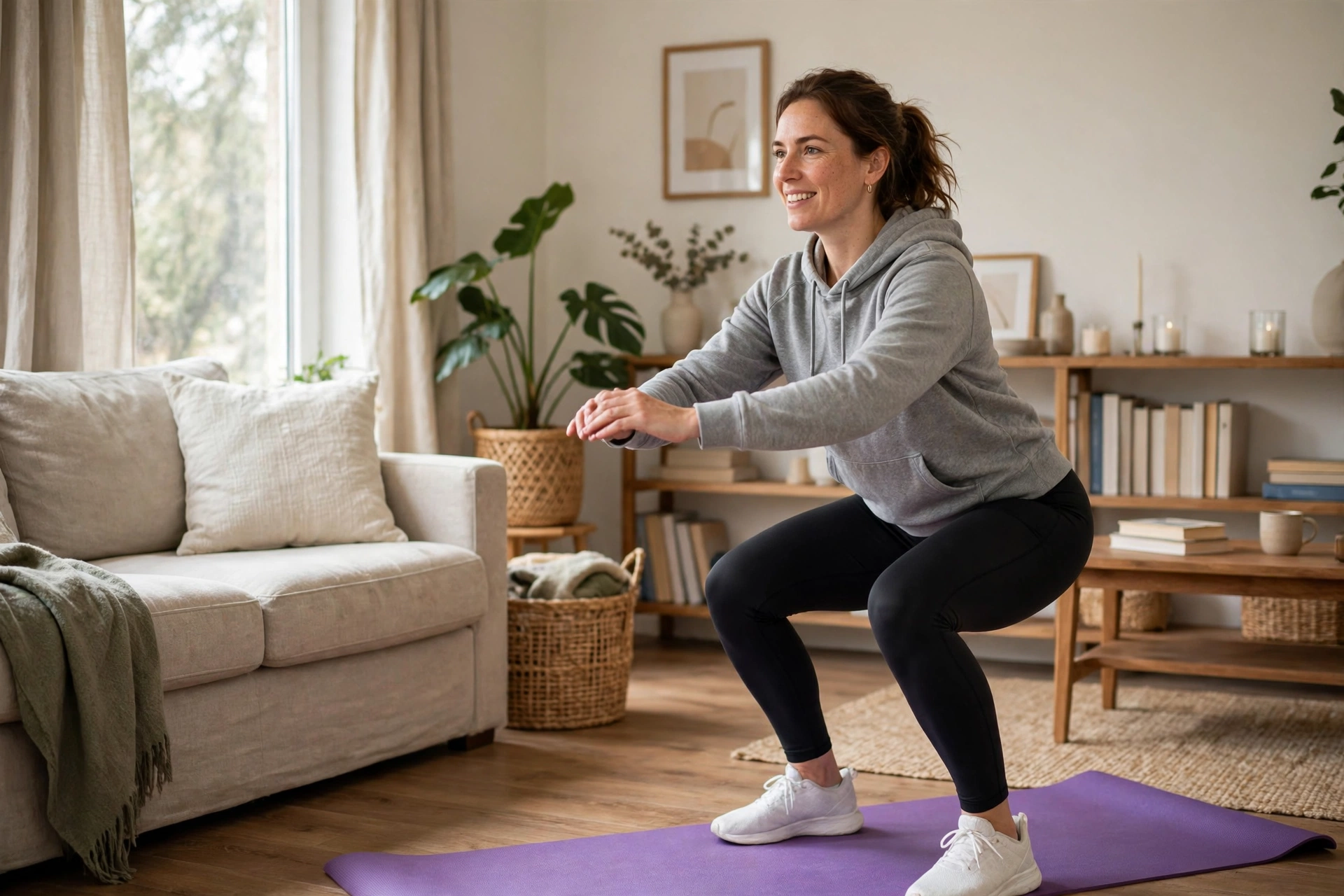
Stand with your feet shoulder-width apart, toes turned slightly out. Push your hips back like you are sitting into a chair, then lower until your thighs are roughly parallel to the floor. Keep your chest up and your knees tracking over your toes. Push through your heels to stand. Squats strengthen your legs and glutes and teach the hip hinge you use every time you pick something up.
2. Incline Push-Up — 8 reps
Place your hands on a sturdy table, counter or sofa arm, shoulder-width apart, and walk your feet back until your body forms a straight line. Lower your chest toward the surface, keeping your elbows close to your body, then push back up. The incline makes push-ups achievable for a beginner while still working your chest, shoulders and arms. As you get stronger, use a lower surface.
3. Glute Bridge — 12 reps
Lie on your back with your knees bent and feet flat on the floor, arms by your sides. Press through your heels and lift your hips until your body forms a straight line from shoulders to knees. Squeeze your glutes at the top, hold for two seconds, then lower slowly. This move wakes up the glutes, which spend most of the day switched off in a chair.
4. Bird Dog — 8 reps each side
Start on all fours, hands under shoulders and knees under hips. Slowly extend your right arm forward and your left leg back until both are straight, keeping your hips level. Hold for two seconds, return, and switch sides. Bird dogs build core stability and balance without loading your spine.
5. Knee Plank — 20 seconds
Rest on your forearms and knees, body in a straight line from head to knees. Tighten your stomach as if someone were about to tap it, and breathe normally. If 20 seconds feels easy, hold for 30 next time. A plank trains your whole core — the muscles that keep you upright and protect your lower back.
6. Reverse Lunge — 8 reps each leg
Stand tall, then step one foot back and lower your back knee toward the floor, keeping your front knee over your ankle. Push through your front heel to return. Reverse lunges are kinder on the knees than forward lunges and train balance, because each leg works on its own.
Cool Down (2 Minutes)
Finish with slow, easy stretches: a standing quad stretch (hold your ankle behind you), a gentle hamstring stretch (one heel forward, hinge at the hips), and arms overhead with a long, slow breath. Your heart rate comes down gradually, and you leave the session feeling loose rather than stiff.
Your Weekly Schedule
Three sessions a week is the sweet spot for a beginner — enough to progress, with rest days in between for your muscles to recover and adapt. A simple pattern:
- Monday: full circuit, 2 rounds
- Wednesday: full circuit, 2 rounds
- Friday: full circuit, 2 rounds
- Other days: rest, or a walk
Pairing the workout with a fixed time of day helps it stick. Many people find mornings work best, before the day fills up — if that appeals to you, this simple morning routine for better energy all day shows how a short workout fits naturally into the first hour after waking.
How to Progress Week by Week
Your body adapts quickly, so the routine should get slightly harder every one or two weeks. Pick one change at a time:
- Week 3: add a third round of the circuit.
- Week 4: add two reps to each move, or hold the plank 10 seconds longer.
- Week 5: move your push-ups to a lower surface, or try full push-ups for a few reps.
- Week 6: slow every rep down — three seconds down, one second up — which makes the same moves noticeably harder.
Keep a simple note on your phone: date, rounds, reps. Seeing the numbers climb is the most honest motivation there is.
Common Beginner Mistakes to Avoid
- Going too hard on day one. Soreness that lasts three days kills motivation. Start easy; you can always add more next time.
- Rushing the reps. Fast, sloppy reps train bad habits. Slow and controlled beats fast and wobbly every time.
- Holding your breath. Breathe out on the effort (standing up from the squat, pushing up) and in on the way down.
- Skipping rest days. Muscles get stronger while you recover, not while you train. Rest days are part of the routine.
- Comparing yourself to online videos. The people in fitness videos have trained for years. Your only comparison is last week’s you.
FAQ
Is 20 minutes enough for a real workout?
For a beginner, yes. Twenty focused minutes of full-body bodyweight work, three times a week, is enough to build strength and fitness in the first months. As you get fitter you can add a third round or more challenging variations — but the starting dose is genuinely useful, not a token effort.
Do I need a yoga mat?
It helps for the floor moves, but it is not essential. A rug, a folded blanket or even a towel under your knees works fine. Bare feet on carpet are comfortable for most of the moves in this routine.
When will I see results?
Most people feel the difference — better energy, easier stairs, less stiffness — within two to three weeks of consistent sessions. Visible muscle change takes longer, usually six to eight weeks. Consistency matters far more than intensity in the early weeks.
Final Thoughts
Starting is the hardest part of any fitness habit, and a beginner home workout routine without equipment removes almost every barrier in the way: no cost, no commute, no special gear, no audience. Clear a small space, warm up for five minutes, run through the circuit twice, and you have done something real for your body today. Do it again on Friday. Then next week, do it again. That is how a habit is built — not with a dramatic first day, but with twenty quiet minutes, repeated.