You finish a long stretch of work, push your chair back, and feel it at once: a stiff neck, tight shoulders, and a lower back that complains when you stand up. If you sit at a desk for most of the day, that feeling is familiar — and it is also fixable. A few gentle stretches, done right where you sit, can loosen the muscles that tighten during hours of screen work. This guide walks you through a simple routine that takes about five minutes and needs no equipment at all.
Why Sitting All Day Leaves You Stiff
When you sit in one position for hours, some muscles stay shortened while others stay stretched. Your hip flexors shorten, your chest tightens as your shoulders round forward, and your neck works overtime to hold your head above a screen. None of this means you have done damage — it means your body has adapted to the position you held longest.
Movement is the reset. Stretching briefly changes the position of those muscles, improves blood flow, and reminds your body what a neutral posture feels like. The NHS advises adults to break up long periods of sitting with activity, and desk stretches are one of the easiest ways to do that during a working day. They do not replace regular exercise — UK guidance recommends adults take at least 150 minutes of moderate activity each week — but they make the hours between workouts far more comfortable.
How to Stretch Safely at Your Desk
Before you start, a few ground rules keep the routine safe and useful:
– Move slowly and gently. A stretch should feel like mild tension, never pain. If a movement hurts, stop and skip it. – Hold each stretch for 20 to 30 seconds. Breathe normally while you hold it; do not hold your breath. – Use a stable chair. Sit on a chair that does not roll or swivel while you stretch, with both feet flat on the floor. – Do both sides. Stretch the left and the right, even if only one side feels tight. – Stop if something feels wrong. Sharp pain, tingling, or numbness are signals to stop, not to push through.
The Chartered Society of Physiotherapy publishes a desk-based exercise guide with similar seated moves, and it carries the same advice: the exercises should not cause pain, and any discomfort means stopping and speaking to a health professional. You can read it here: desk-based exercises from the Chartered Society of Physiotherapy.
Neck Stretches You Can Do Without Leaving Your Chair
Your neck carries the weight of your head all day, and screen work usually pulls that head forward. These two moves directly target the stiffness that builds up there.
Neck side stretch. Sit tall with your feet flat on the floor. Drop your right ear toward your right shoulder until you feel a gentle stretch down the left side of your neck. Rest your right hand lightly on the left side of your head for a little extra pull — do not yank. Hold for 20 to 30 seconds, then switch sides.
Chin tucks. Sit tall and look straight ahead. Pull your chin straight back, as if you are making a double chin, and hold for five seconds. Release and repeat five times. This move strengthens the deep neck muscles that weaken when your head drifts forward toward the screen, and it is one of the most useful stretches for desk workers.
Shoulder and Upper Back Stretches
Shoulders creep up toward your ears when you type for hours. These moves bring them back down.
Shoulder rolls. Lift both shoulders toward your ears, roll them back in a slow circle, and lower them. Repeat five times, then reverse the direction for five more. It looks simple, and it is — but it releases a surprising amount of tension.
Shoulder blade squeeze. Sit tall and squeeze your shoulder blades together, as if you are trying to hold a pencil between them. Hold for five seconds, release, and repeat five times. This wakes up the muscles between your shoulder blades that go quiet when you hunch.
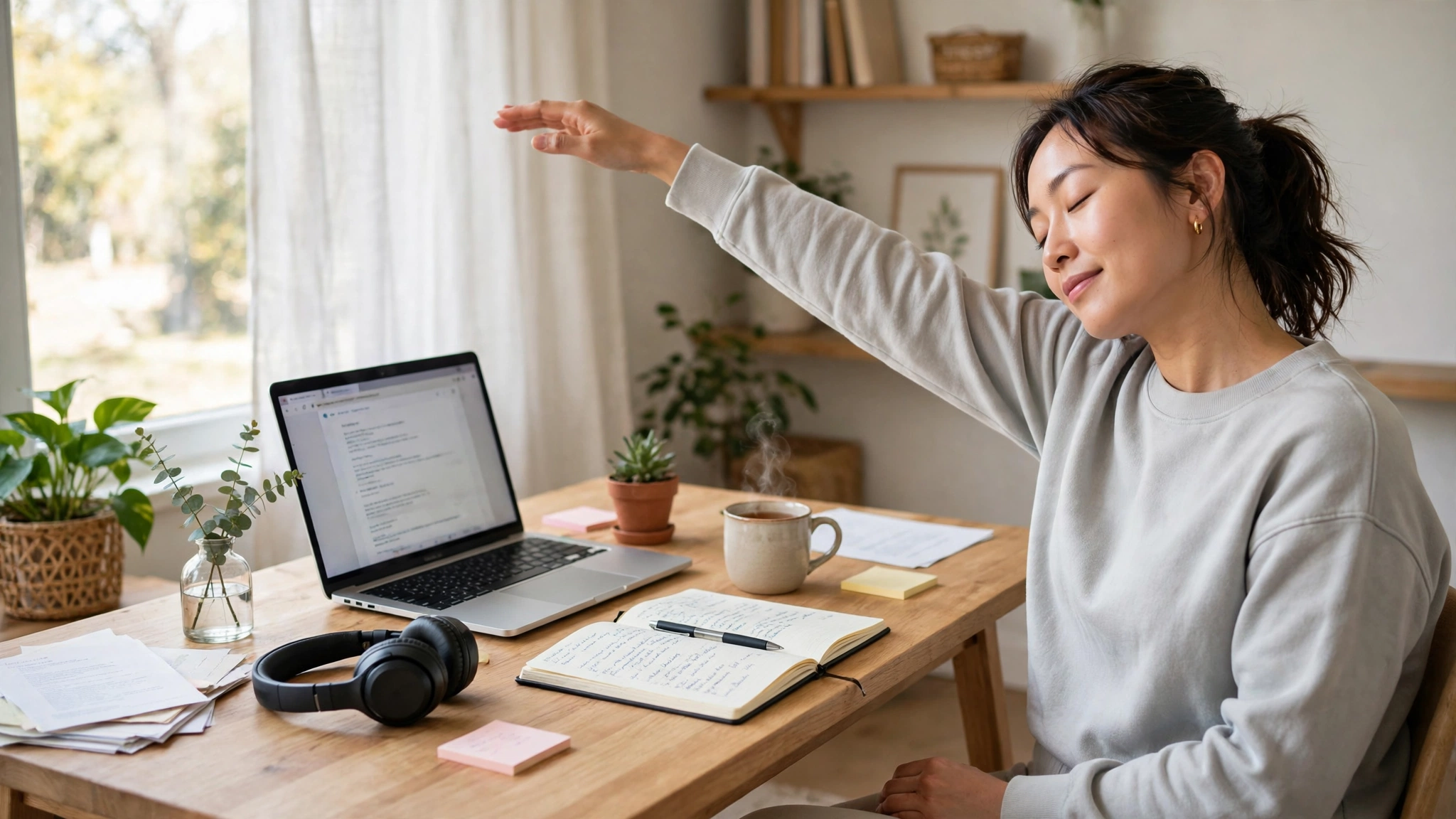
Cross-body arm stretch. Bring your right arm across your chest and hold it gently with your left hand just above the elbow. Hold for 20 seconds, then switch arms. This stretches the back of the shoulder, which tightens with mouse work.
Chest Opener for Hunched Shoulders
Hours of leaning toward a keyboard tighten the chest muscles and pull the shoulders forward. This stretch reverses that pattern.
Sit tall and clasp your hands behind your back, or hold the back of your chair. Gently lift your hands a little and open your chest, keeping your chin level. Hold for 20 seconds while you breathe normally. You should feel a stretch across the front of your chest and shoulders, not a strain in your lower back. If clasping your hands behind you is uncomfortable, simply press your palms together behind your back instead.
Wrist and Hand Stretches for Keyboard Work
Typing and mouse work keep your hands in one small range of motion all day. These stretches give your wrists and fingers a break.
Wrist flexor stretch. Hold your right arm out in front of you, palm facing up. With your left hand, gently pull your right fingers back toward you until you feel a stretch in the forearm. Hold for 20 seconds, then switch hands and repeat with the palm facing down.
Finger spreads. Spread your fingers wide, hold for five seconds, then make a fist and hold for five seconds. Repeat five times. It is a small move, but it relieves the cramped feeling that builds up after long typing sessions.
Lower Back and Hip Stretches
Your lower back and hips take the most punishment from sitting, because sitting keeps your hips bent and your lower back loaded for hours. These three seated stretches help.
Seated spinal twist. Sit tall with both feet flat on the floor. Turn your upper body to the right and place your right hand on the back of the chair. Hold for 20 seconds, breathing normally, then slowly turn to the left. Twist only as far as feels easy — never force it or pull on the chair to go further.
Seated figure-four stretch. Place your right ankle on your left knee, keeping your foot flexed. Sit tall and lean forward gently from your hips until you feel a stretch in your right hip and buttock. Hold for 20 to 30 seconds, then switch legs. This targets the deep hip muscles that tighten from sitting.
Seated hamstring stretch. Perch near the front edge of your seat and stretch your right leg out in front of you, heel on the floor and toes pointing up. Sit tall and lean forward slightly from your hips until you feel a gentle stretch along the back of your leg. Hold for 20 to 30 seconds, then switch legs.
Two Standing Stretches Worth Getting Up For
Most of this routine works from your chair, but two moves are better on your feet. Stand up once during your workday and do both.
Standing back extension. Stand with your feet shoulder-width apart and place your hands on your lower back. Gently lean backward, looking slightly upward, and hold for five seconds. Repeat three times. After hours of bending forward, this move bends your spine the other way.
Standing calf stretch. Place your hands on a wall or your desk, step your right foot back, and press your right heel into the floor while keeping the leg straight. Hold for 20 seconds, then switch legs. Sitting shortens the calf muscles more than most people realise, and this stretch is a quick fix.
A Simple 5-Minute Desk Stretch Routine
You do not need to do every stretch every time. This short routine covers the main trouble spots in about five minutes:
- Morning, before you start: shoulder rolls, chin tucks, and the chest opener — two minutes to set your posture for the day.
- Midday, between tasks: neck side stretch, cross-body arm stretch, and wrist stretches — two minutes to break up the longest sitting block.
- Afternoon, when energy dips: seated spinal twist, figure-four stretch, and the standing back extension — two minutes to loosen your back and hips before the last stretch of work.
Set a quiet reminder for these three points in the day. The routine works best when it becomes a habit, not a one-off fix after a painful day.
Small Habits That Make Stretching Stick
A stretching routine only helps if you actually do it, and the easiest way to keep it going is to attach it to something you already do. Stretch while your coffee brews, between video calls, or while a file downloads. Pairing the routine with an existing habit removes the need to remember it separately.
It also helps to start the day with movement rather than going straight from bed to chair. A simple morning routine for better energy all day sets your posture and energy before the sitting starts, and a short stretch before bed can ease the tension that builds up by evening — which is one reason stretching fits well alongside the advice in our guide on how to sleep better without medication.
Finally, check your setup. A screen at eye level, a chair that supports your lower back, and feet flat on the floor reduce the strain that stretching has to undo. Stretching treats the symptoms of a long sitting day; a better setup reduces the cause.
When to See a Doctor Instead of Stretching
Desk stretches are for ordinary stiffness from sitting. They are not a treatment for injury or illness. See a doctor or physiotherapist if your pain lasts more than a few weeks, keeps coming back, or comes with numbness, tingling, weakness, or pain spreading down a leg. The same applies if the pain started after an injury, or if stretching makes it worse rather than better. A health professional can check whether something else is going on and advise you on what is safe for your situation.
FAQ:
How often should I do desk stretches?
A short routine two or three times a day works well for most desk workers — morning, midday, and afternoon. If you sit for very long stretches without a break, once an hour is even better. Short and regular beats long and occasional.
How long should I hold each stretch?
Hold each stretch for 20 to 30 seconds and breathe normally. Shorter holds of five seconds work for moves like chin tucks and shoulder blade squeezes, which you repeat instead of holding.
Can desk stretches replace exercise?
No. Stretches ease stiffness and break up long sitting, but they do not build fitness. Adults still need regular moderate activity — around 150 minutes a week according to UK guidance — alongside the stretching routine.
Do I need any equipment for desk stretches?
No. Every stretch in this guide uses only your chair, and two use a wall or desk for balance. A stable, non-rolling chair is the only requirement.
Is it normal for stretches to feel uncomfortable?
Mild tension is normal; pain is not. A stretch should feel like a gentle pull. If you feel sharp pain, tingling, or numbness, stop the stretch and see a health professional if it continues.
Final Thoughts
Sitting all day does not have to mean ending the day stiff and sore. A few minutes of desk stretches, spread across the working day, keeps your neck, shoulders, back, and hips moving the way they are meant to. Start with the five-minute routine, keep it simple, and let it become part of your workday the same way your morning coffee is. Your body will notice the difference long before your calendar does.