
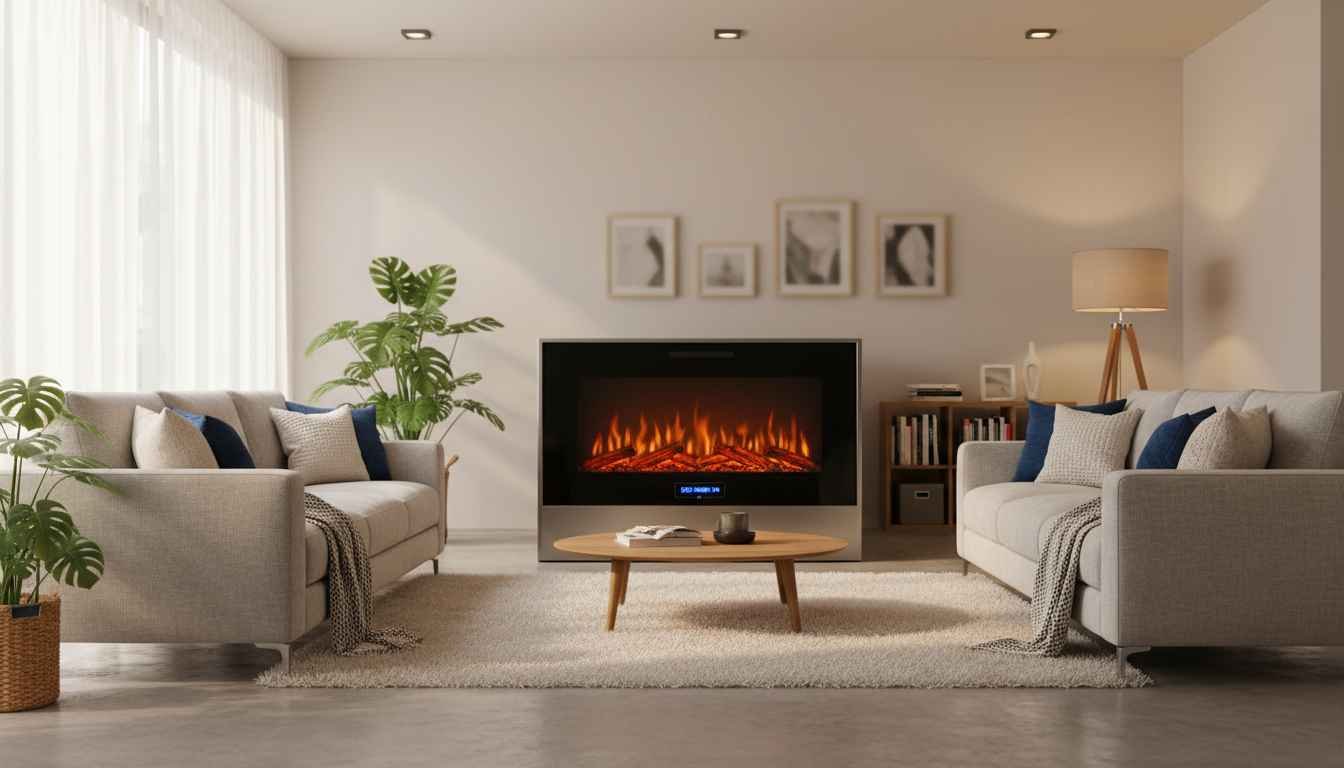
Imagine settling into your favourite chair on a cold evening, the room glowing with the flicker of a fire — no chimney to clean, no wood to haul, no smoke drifting through the house. That is the promise of the modern electric fireplace, and for many homes it delivers. But marketing claims around these units can be inflated, so here is an honest, practical look at how they work, what they cost to run, and whether one makes sense for your home.
How Electric Fireplaces Actually Work
An electric fireplace has two separate jobs. The flame effect is created with LED lighting and mirrors or projection — purely visual, costing very little to run. The heat comes from an electric heating element with a fan that pushes warm air into the room, much like a portable space heater in a decorative cabinet. There is no combustion, no venting and no emissions inside your home, which is why installation is so simple.
Types of Electric Fireplaces
- Freestanding stoves — plug in and place against a wall; the easiest option for renters
- Wall-mounted units — slim, modern, hung like a television; good for smaller rooms
- Inserts — designed to fit into an existing fireplace opening, giving an old hearth new life
- TV stand and mantel consoles — furniture pieces with a fireplace built in; popular in living rooms
Efficiency and Running Costs: The Honest Picture
Electric heating converts essentially all the electricity it uses into heat at the unit — nothing goes up a chimney. That sounds like perfect efficiency, and at the point of use it is. The catch is the price of electricity: per unit of heat, electricity usually costs more than natural gas, so an electric fireplace is an economical way to warm one room, not a cheap way to heat an entire house.
Most units draw around 1,200 to 1,500 watts on their high heat setting — similar to a standard space heater. Your actual running cost depends on your local electricity rate and how many hours you run it, so check your tariff before estimating savings. Used for zone heating — warming the living room in the evening instead of heating the whole house — an electric fireplace can genuinely trim your heating bill. Used as a primary heat source for a large, poorly insulated home, it will disappoint.
Benefits Worth Knowing
- Simple installation — most models just plug into a standard outlet; no chimney, gas line or venting
- Low maintenance — no ash, soot or chimney sweeping; occasional dusting is usually enough
- Safe around children and pets — the glass stays cool to the touch on most models, and many include automatic shut-off and overheat protection
- Year-round ambience — the flame effect usually runs independently of the heater, so you can enjoy the look in summer too
- No indoor emissions — nothing burns, so there is no smoke, carbon monoxide or particulates in your living space
Limitations to Consider
Electric fireplaces heat a limited area — typically a single room of modest size. They will not replace a central heating system in a cold climate, and in homes with high electricity rates the running costs add up if used for many hours daily. If you love the smell and crackle of real wood, no LED flame will fully reproduce that experience.
Buying Checklist
- Measure your room and check the unit’s rated heating area before buying
- Confirm the power requirements — most run on a standard outlet, but larger units may need a dedicated circuit
- Look for safety certifications from a recognised testing laboratory for your country
- Check the flame-only mode if you want ambience without heat
- Compare thermostat and timer features — these make a real difference to running costs
- Read the warranty terms on both the heating element and the LED flame components
Frequently Asked Questions
Do electric fireplaces use a lot of electricity?
On high heat they draw about as much as a typical space heater. The flame effect alone uses very little power, so running it for looks is cheap — it is the heating element that consumes energy.
Can an electric fireplace heat a whole house?
No. They are designed as supplemental or zone heaters for individual rooms. For whole-house heating in cold climates you need a central system.
Are electric fireplaces safe to leave on?
They are among the safest heating options, with cool-touch glass and automatic shut-off on most models — but like any heater, they should not be left running unattended for long periods or while you sleep unless the manufacturer specifically allows it.
Final Thoughts
An electric fireplace is at its best as a targeted comfort upgrade: cosy ambience, straightforward installation and efficient zone heating for the rooms you actually live in. Buy the right size for your space, understand your electricity rate, and it can be a genuinely satisfying addition to your home — just do not expect it to replace your furnace.