You know the feeling. You come home, drop your keys on the nearest surface, step over shoes that never seem to have a place, and scan a room that feels smaller every week. A small apartment does not have to feel cramped. With a few honest systems — not expensive containers, not a weekend of Pinterest projects — your space can stay tidy, calm, and easy to live in. This guide covers the small apartment organization ideas that actually work: what to remove first, how to store what stays, and how to keep it that way.
Start by Decluttering Before You Organize
Organization fails when it starts with buying storage boxes. Boxes do not create space; they hide the problem for a few weeks. Start by removing what does not belong in your home at all.
Work one area at a time — a single drawer, one shelf, one corner — and sort everything into three groups: keep, donate, and throw away. Be honest about the “keep” pile. If you have not used something in a year and it has no clear purpose, it is taking up space you need for things you actually use. Duplicates go first: two can openers, three phone chargers for a phone you no longer own, a drawer of plastic bags.
For clothes, use the simplest test there is: if it does not fit, is damaged, or you would not choose to wear it tomorrow, let it go. A wardrobe with fewer clothes you love is easier to organize than a packed closet full of maybes.
Give Every Item a Home
Clutter in a small apartment is rarely about having too much stuff. It is about things having no fixed place. When an item has no home, it lands on the nearest flat surface — and flat surfaces are the first thing to disappear in a small home.
Assign a specific spot to the things you use every day: keys, wallet, phone charger, sunglasses, reusable bags. A small tray or a row of hooks by the door handles the whole arrival routine in seconds. Do the same for the less obvious items: one drawer for tools and batteries, one basket for cleaning supplies, one shelf for paperwork. When everything has a place, putting things away takes seconds instead of decisions.
Labels sound fussy, but they are what make a system survive past the first week. A labeled basket tells everyone in the household — including future, tired you — exactly where something belongs. Use simple words, not categories only you would understand.
Use Your Walls, Not Your Floor
Floor space is the scarcest resource in a small apartment, so stop storing things on it. Walls, doors, and the backs of cupboards are storage space you already own.
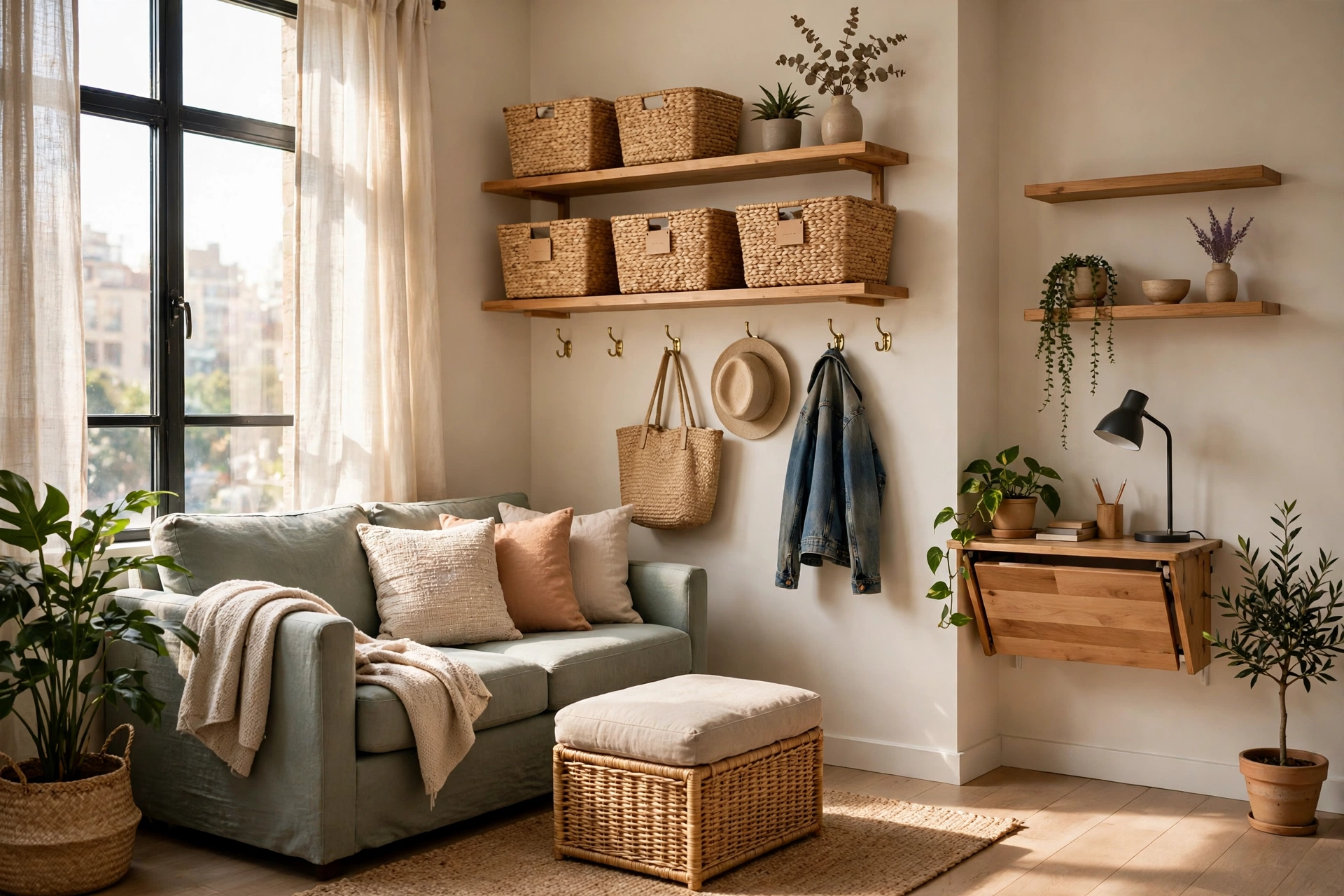
Floating shelves above a desk, a sofa, or a doorway hold books, plants, and baskets without taking a single square foot of floor. Hooks on the back of a bedroom or bathroom door hold coats, towels, and bags. A magnetic strip in the kitchen keeps knives off the counter. A pegboard in a hallway or home office holds tools, cables, and accessories in plain sight, where you can actually reach them.
Go vertical inside cupboards too. Shelf risers double the usable space in a kitchen cabinet. Stackable bins turn a deep, dark shelf into two or three visible layers. The rule is simple: if you cannot see it, you will forget it — and you will buy a second one.
Choose Furniture That Works Twice as Hard
In a small apartment, every piece of furniture should earn its place twice. A storage ottoman holds blankets and doubles as a coffee table. A bed with drawers underneath, or a lift-up frame, stores out-of-season clothes and spare bedding. A fold-down wall desk gives you a workspace that disappears when the workday ends.
Before buying anything new, measure twice and ask one question: does this piece store something, fold away, or serve two purposes? A beautiful chair that only holds a pile of clothes is not earning its floor space. A narrow console table with a drawer, on the other hand, can hold keys, mail, and chargers in an entryway that has no room for a cabinet.
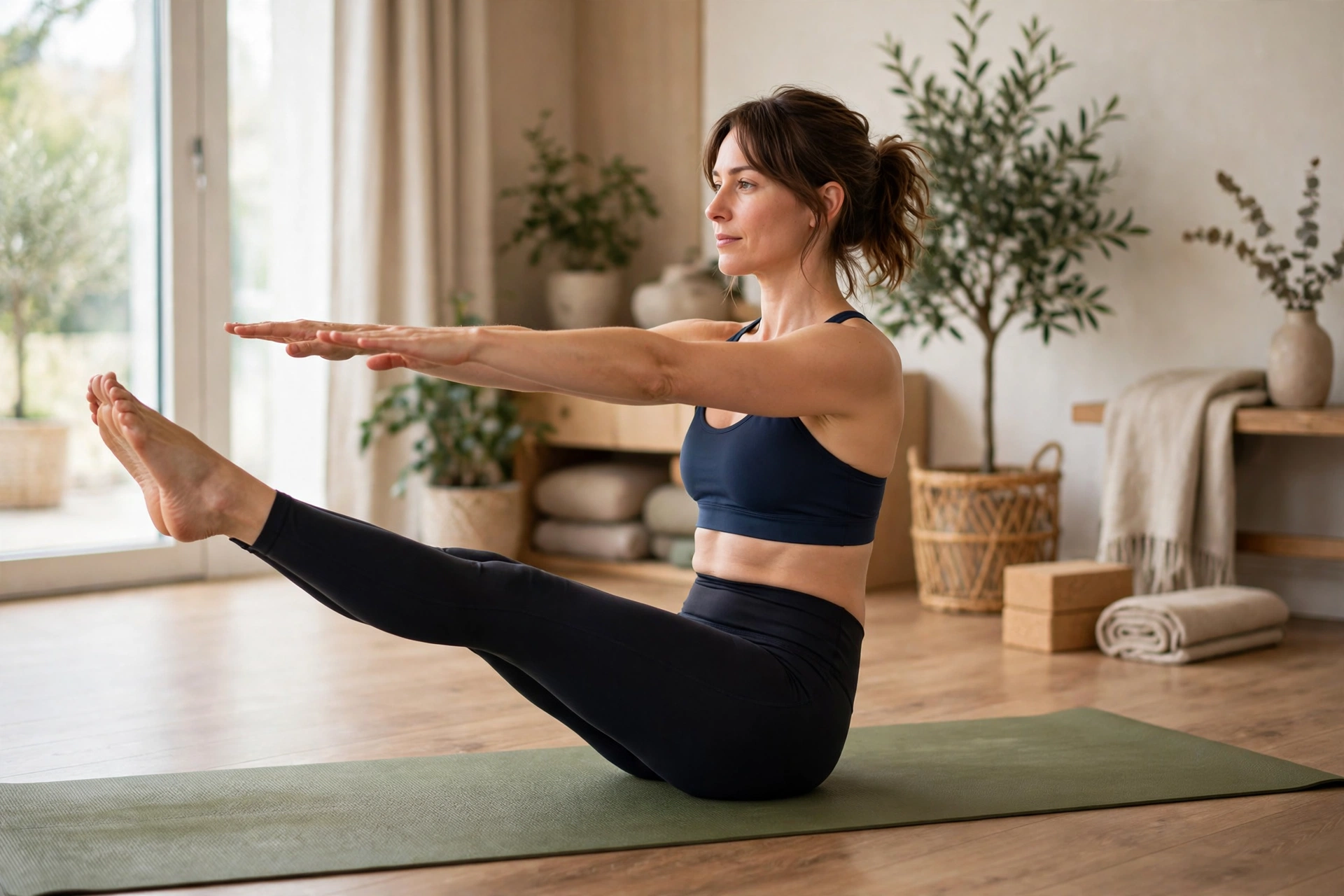
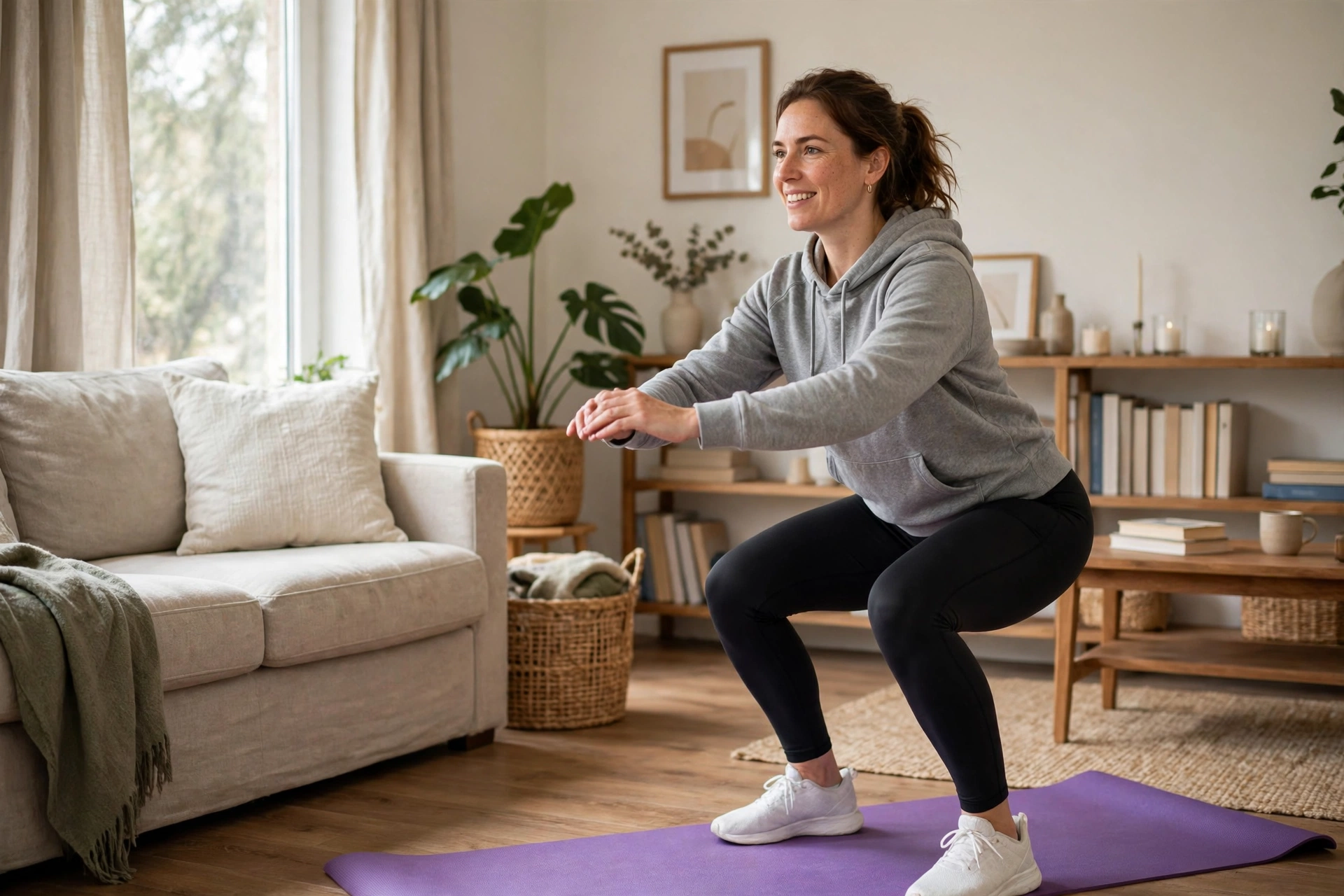
Clear floor space pays off in ways beyond tidiness. An open stretch of floor is where you stretch, move, and relax — even a simple home workout routine without equipment needs nothing more than a mat-sized patch of clear floor.
Organize Room by Room
A whole-apartment overhaul is overwhelming. Room by room, the work becomes manageable, and each finished room motivates the next one.
The Kitchen
Group items by how you actually cook: everyday plates and glasses at eye level, cooking tools near the stove, rarely used appliances on the highest shelf or in a cupboard. Use the inside of cabinet doors for measuring spoons, lids, and cleaning supplies. Keep the counter clear except for the one or two things you use daily — a clear counter makes a small kitchen feel twice as big.
The Bedroom
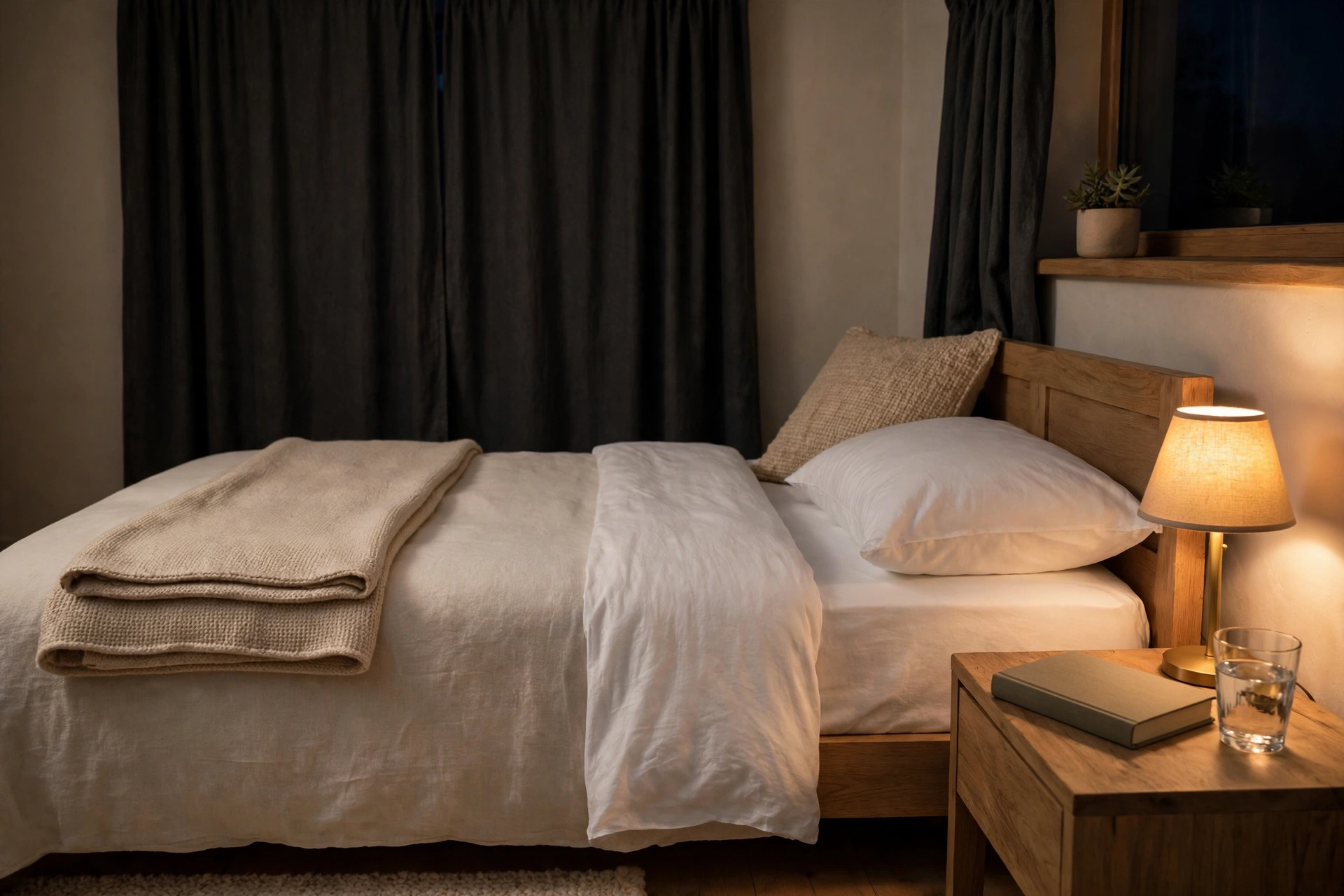
The bedroom should be the calmest room in the apartment. Use under-bed storage for out-of-season clothes. Keep one small basket for laundry instead of a chair that collects clothes. A bedside shelf or a narrow nightstand with a drawer is enough — the surface should hold a lamp and a book, not a week’s worth of clutter.
The Bathroom
Small bathrooms need ruthless editing. Keep only the products you use every day within reach, and store the rest in a single labeled box. A shower caddy, a narrow shelf above the toilet, and hooks on the door handle most storage needs. Check expiry dates twice a year and throw out what has expired — old products are the quietest form of clutter.
The Entryway
Even a hallway without a real entryway can work with a wall-mounted shelf, a few hooks, and a small shoe tray. The goal is a five-second routine: hang the coat, drop the keys, put the shoes in the tray. When the entryway works, the rest of the apartment stays cleaner, because clutter stops at the door.
Carve Out a Work-From-Home Corner That Disappears
Many small apartments now double as offices, and a permanent desk can swallow a living room. A fold-down desk, a laptop stand on a shelf, or a small table that tucks against a wall gives you a real workspace without giving up the room.
Keep work supplies in one basket or one drawer so the whole setup can be packed away in a minute. A cable organizer stops the tangle of chargers that makes any corner look messy. And when you sit for long stretches, build in a short break to stand and move — even desk stretches for people who sit all day can be done in the few square feet beside your chair.
Keep It Organized With a Ten-Minute Daily Reset
The best organization system is the one you can maintain on a tired evening. Forget the big weekend clean-out as your main strategy. Instead, build a ten-minute daily reset: put away anything that is out of place, clear the kitchen counter, take out anything that needs to leave the apartment — recycling, donations, returns.
Set a simple rule for new things coming in: one in, one out. A new shirt means an old one leaves. A new gadget means the old one is donated or sold. Without this rule, even the best system slowly fills up again.
Once a month, walk through the apartment with a bag and remove ten things you no longer need. Ten things is small enough to do in fifteen minutes, and over a year it keeps hundreds of items from quietly accumulating.
FAQ:
How do I organize a small apartment on a low budget?
Start with decluttering, which costs nothing. Then use what you already have — shoe boxes as drawer dividers, jars for small items, existing baskets. Buy storage only after you know exactly what needs a home and what size it needs to be.
What is the biggest mistake people make when organizing a small apartment?
Buying storage containers before decluttering. Containers organize the clutter you already have instead of reducing it, and the apartment ends up just as full — only neater-looking for a few weeks.
How can I make a small apartment feel bigger?
Clear the floor, keep surfaces mostly empty, use light colors, and let natural light in. Visual calm matters as much as physical space: a tidy room with visible floor always feels larger than a cluttered one of the same size.
How often should I declutter a small apartment?
A quick ten-minute reset every day, a short declutter of one area each month, and a full review of clothes and household items twice a year is enough for most people.
Final Thoughts
A small apartment does not need more storage products — it needs fewer things, a clear place for each one, and a short daily habit that keeps the system alive. Start with one drawer today. Give everything a home, use the walls before the floor, and let your furniture work twice as hard. The result is not just a tidier apartment; it is a home that feels bigger, calmer, and easier to live in. And if your next move is finding a new place, start by learning how to find cheap accommodation without booking scams — so the next apartment starts organized from day one.