You step outside with your morning coffee, and there it is: a small patch of green you grew yourself. A tomato plant heavy with fruit, basil you snip for tonight’s dinner, lettuce picked ten minutes ago. Starting a vegetable garden sounds like a big project, but it is really a series of small, simple decisions — and this guide walks you through each one.
Start With the Right Spot
Sunlight decides almost everything in a vegetable garden. Most vegetables need at least six hours of direct sun a day to grow well. Before you buy a single seed, spend a day watching your yard, balcony, or windowsill to see which spots get morning sun and where the sun lingers longest.
A south-facing spot is warmest and brightest, suiting tomatoes and peppers. Leafy greens like lettuce and spinach manage with a little less light.
Also think about water — you will water often in warm weather, so pick a spot within easy reach of a tap.
Choose Vegetables That Forgive Beginners
Your first garden should build your confidence, not test it — so start with the easiest, most rewarding vegetables.
Good first choices:
- Lettuce and salad leaves — grow fast, need little space, and you can pick leaves a few at a time.
- Radishes — ready to eat in about a month, which makes them perfect for impatient beginners.
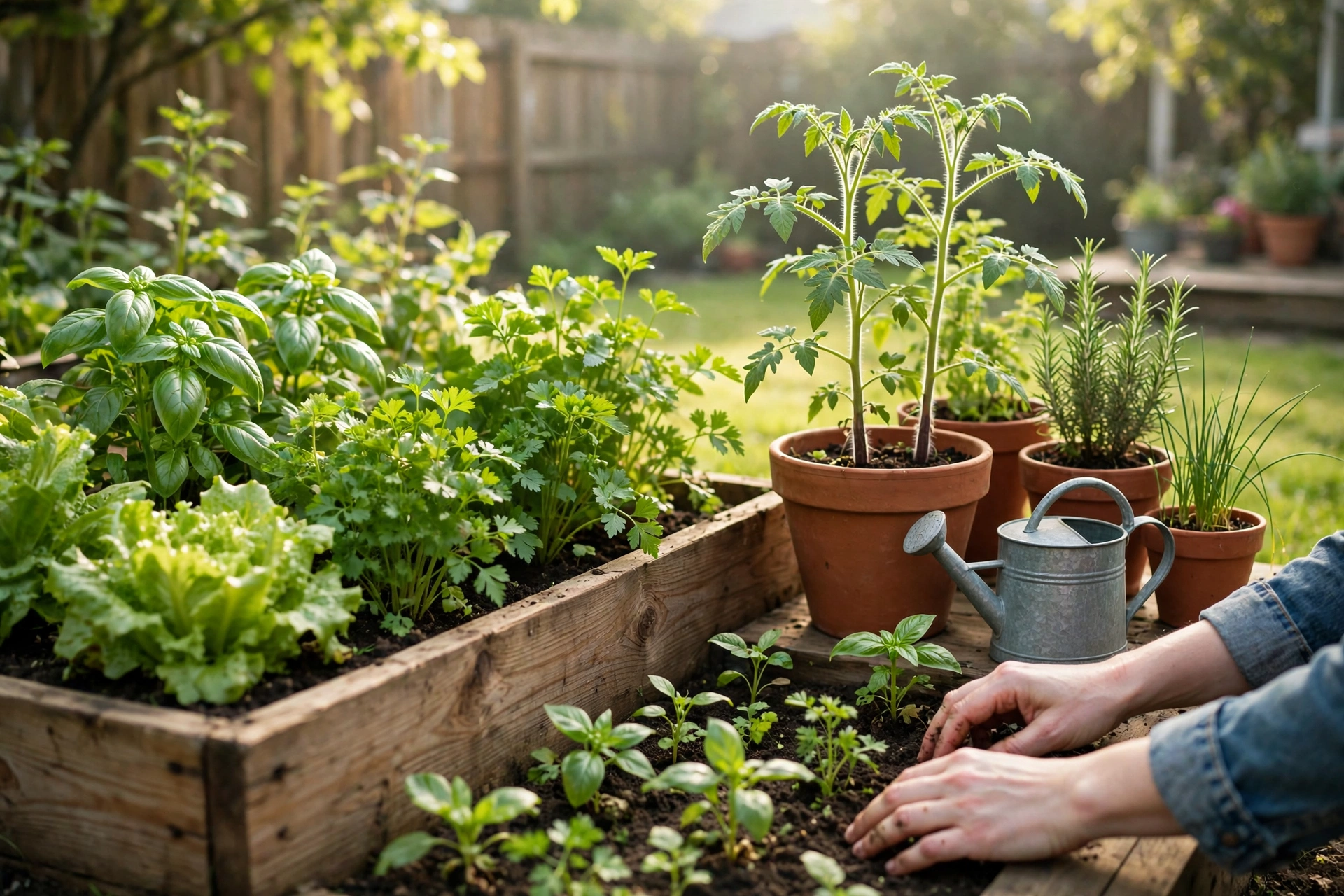
- Herbs like basil, mint, and parsley — small, productive, and useful in everyday cooking. Keep mint in its own pot, as it spreads aggressively.
- Tomatoes — more work, but nothing beats one picked warm from the plant; cherry tomatoes are the easiest.
- Green beans — vigorous growers that produce heavily from a small patch.
Hold off on the demanding crops for now. Cauliflower, celery, and melons need precise conditions and long seasons. Start with five or six easy vegetables and add harder ones next season.
Containers, Raised Beds, or Open Ground?
You do not need a big backyard. The right setup depends on the space you have and the soil you are starting with.
Containers are the simplest way to begin. Pots, grow bags, and window boxes work on balconies, patios, and doorsteps. They warm up fast, drain well, and can be moved to chase the sun. Use the biggest pots you can manage — small ones dry out quickly and restrict roots. A tomato needs a pot at least 30 cm deep and wide; herbs are happy in much smaller ones.
Raised beds are a good middle step. A simple timber frame filled with good soil gives you a defined growing area, better drainage, and soil you control completely.
Open ground works well if your soil is already decent — dark, crumbly, and full of life. If it is heavy clay or thin and stony, a raised bed or containers will get you growing faster.
Get the Soil Right
Good soil is the quiet secret behind every productive garden — it should hold moisture but drain freely, and be rich in organic matter. Dig a handful: it should feel crumbly and smell earthy, not sour or lifeless.
Whatever you are growing in, mix in plenty of compost before planting. Well-rotted compost feeds the soil, improves its structure, and helps it hold water. If you are filling pots or a raised bed, use a quality potting mix blended with compost rather than plain topsoil from the yard.
Do not plant in soil recently treated with weed killer. When in doubt, grow in containers with fresh mix.
Seeds or Seedlings?
Seeds are cheap and give you the widest choice of varieties, but need a few extra weeks to get going. Seedlings from a nursery cost more but give you a head start of several weeks.
For a first garden, buy seedlings for slow starters like tomatoes and peppers, and sow seeds directly for fast growers like lettuce, radishes, and beans. Follow the spacing on the seed packet — crowded plants compete for light and water and produce less, not more.
Plant at the right depth (the packet tells you) and water gently after sowing so you do not wash the seeds away. Label everything — in a month, when everything is green and growing, you will be glad you know which row is which.
Watering and Feeding, Without the Guesswork
Vegetables need steady water, especially while they are young and while fruit is forming. Keep the soil evenly moist — not soaking, never bone dry — and water at the base of the plants in the morning, so the leaves stay dry and the plants can drink before the heat of the day.
Containers dry out faster than beds or open ground, so check them daily in hot weather. A simple test: push a finger about 2 cm into the soil. If it feels dry, water; if it feels damp, wait.
Feed lightly. Compost at planting covers most needs, and a liquid feed every couple of weeks during the main growing season helps heavy feeders like tomatoes. More fertilizer is not better — overfed plants grow lots of leaves and little fruit.
Growing in a Small Space
A small home can still grow a useful amount of food. Grow vertically: beans and peas climb a trellis, cucumbers can be trained upward, and herbs thrive on a sunny windowsill. Hanging baskets suit cherry tomatoes and strawberries.
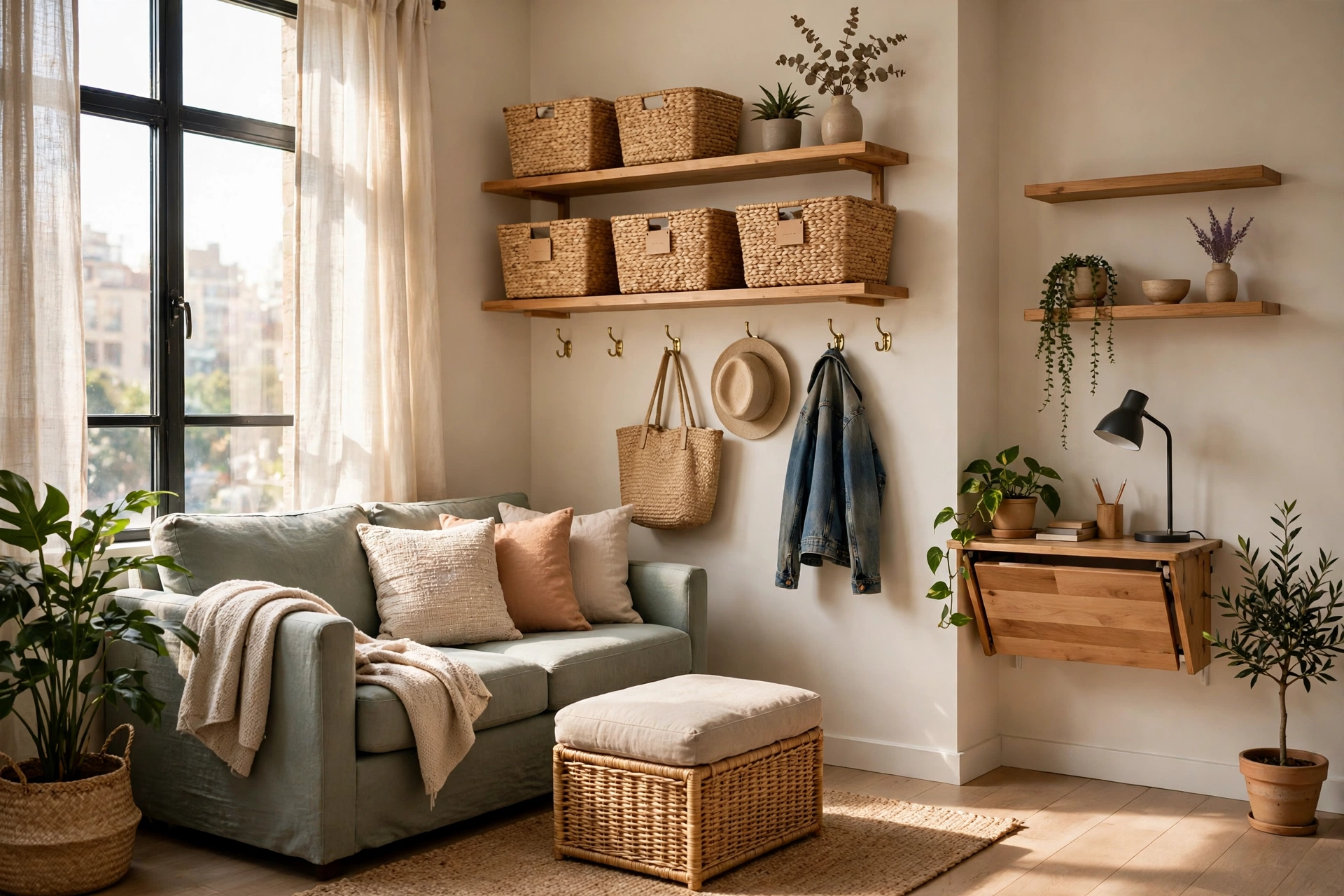
Think in layers — tall plants at the back, low leafy crops in front, herbs tucked into the gaps. Even a single sunny balcony can hold a surprising amount if you plan the space. If your home is short on room, these small apartment organization ideas can help you carve out a tidy corner for pots and planters without cluttering your living space.
Mistakes Most Beginners Make
Almost every new gardener makes the same few mistakes, and all of them are easy to avoid once you know them.
Planting too much at once is the biggest one — ten tomato plants sound exciting in spring and overwhelming by midsummer. Start small; you can always add more next season. Planting too close together is another — crowded plants stay damp, attract pests, and produce less.
Forgetting to check for pests is a third. Look under the leaves once or twice a week — most problems are small when caught early. Pick off caterpillars by hand and wash aphids off with a strong spray of water before reaching for any spray.
Finally, do not give up after one bad result — a failed crop is normal, even for experienced gardeners. Note what went wrong, adjust, and try again.
When to Harvest
Lettuce leaves taste best young and tender — pick outer leaves and let the plant keep growing. Radishes should be pulled before they get woody, and tomatoes are ready when fully coloured and give slightly when pressed.
Harvest in the morning when plants are cool and crisp, and pick little and often rather than waiting for one big harvest. Regular picking encourages many plants — beans, zucchini, and herbs especially — to keep producing.
FAQ
How much space do I need to start a vegetable garden?
Very little. A sunny windowsill can grow herbs, a balcony can hold several pots of salad leaves and tomatoes, and a raised bed of about one square metre can feed a small household’s salads all season.
How much does it cost to start a small vegetable garden?
A modest start — a few pots, a bag of potting mix, compost, and seeds or seedlings — is inexpensive, and the harvest quickly offsets it. Start simple and add only what you need.
What vegetables grow best in containers?
Lettuce, herbs, radishes, spring onions, cherry tomatoes, and peppers all do well in pots. Choose compact varieties where possible, use the largest pots you can fit, and water containers more often than beds.
Final Thoughts
Starting a small vegetable garden at home is not about having the perfect yard or knowing everything in advance. It is about choosing a sunny spot, picking a few forgiving vegetables, giving them decent soil and steady water, and learning as you go. Your first harvest — even just a handful of salad leaves — will taste better than anything from a shop, because you grew it. Start small this week, and let the garden grow with you.