
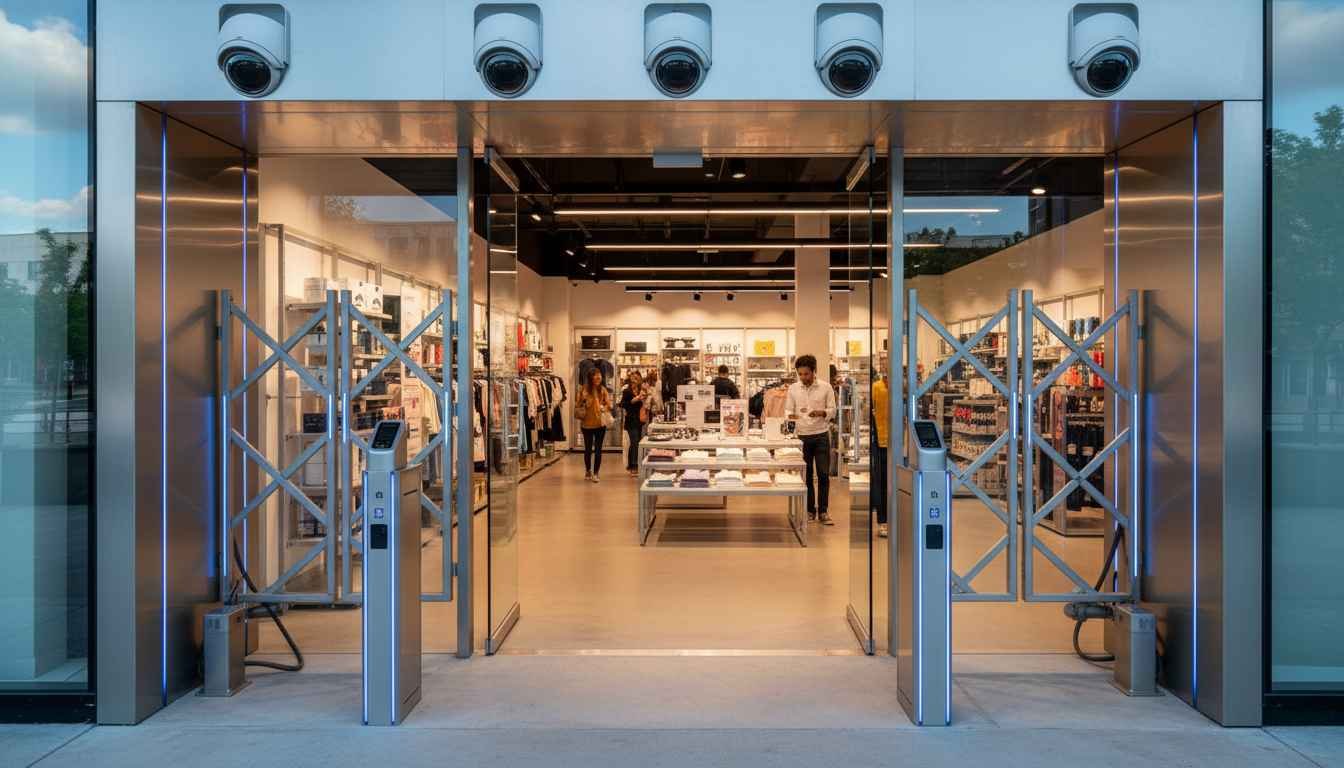
Imagine if you could prevent every unauthorized entry, theft, and operational bottleneck in your retail space with a single, integrated system. Picture a scenario where your store not only detects threats in real time but actively enforces control over who comes in and out – automatically, efficiently, and without human error. This is no futuristic fantasy; retail crash gates surveillance systems are making it a reality.
To dig deeper, we spoke with Jordan Michaels, a leading security technology strategist and consultant for Fortune 500 retail chains, to uncover why these systems are becoming indispensable for high-traffic stores and supply chain hubs.
Q1: Jordan, what exactly are retail crash gates surveillance systems, and why should retailers care?
Jordan Michaels: Retail crash gates surveillance systems are sophisticated physical and digital barriers integrated with AI-driven monitoring. Unlike standard turnstiles or alarmed doors, crash gates are designed to physically resist unauthorized intrusion, while the surveillance component continuously tracks movement, behavior patterns, and potential security breaches. In essence, it’s a dual-layer defense: mechanical deterrence plus intelligence-led monitoring.
For retailers, this matters because losses from theft, fraud, and operational inefficiencies can account for up to 2% of annual revenue, according to a 2023 report published in the Journal of Retail Security and Loss Prevention. Deploying these systems not only reduces shrinkage but also enhances customer flow management and safety compliance.
Moreover, implementing such advanced solutions allows retailers to streamline processes, reducing the need for manual monitoring and security personnel. Manhattan offers cutting-edge software integrations that merge your security infrastructure with your operational dashboards for seamless oversight.
Q2: How do these systems work on a practical level?
Jordan Michaels: Think of it as a smart checkpoint. When a customer or employee approaches, sensors detect identification markers – be it RFID, biometric, or access cards. The crash gate evaluates clearance levels, and the surveillance system analyzes behavior. If something is amiss, the gate locks down instantly while alerting your central monitoring system. It’s fast, automated, and nearly impossible to bypass.
Unlike traditional alarms that only signal after a breach occurs, crash gates prevent the breach itself. Integration with AI analytics allows for predictive monitoring: the system learns patterns and flags suspicious activity even before it escalates.
Q3: Are there specific industries or retail environments where this technology is most effective?
Jordan Michaels: Absolutely. High-traffic stores, electronics outlets, luxury goods retailers, and warehouses benefit most. These environments often face high theft risk and complex operational challenges. For example, electronics stores have high-value inventory and multiple access points, making manual monitoring inefficient. Crash gates coupled with surveillance provide both deterrence and actionable insights.
In today’s rapidly evolving retail landscape, businesses are increasingly confronted with the challenge of theft and inventory loss, which can significantly impact their bottom line. As a result, innovative solutions are being sought to enhance security measures and protect assets. One such promising advancement is the implementation of retail crash gates surveillance systems, which combine physical barriers with cutting-edge surveillance technology. These systems not only deter potential thieves but also provide real-time monitoring, ensuring that retailers can respond swiftly to any incidents. As we delve into this topic, we will explore how these systems are shaping the future of loss prevention and the various benefits they offer to retailers looking to safeguard their operations.
Moreover, supply chain and logistics centers can monitor employee flow, track sensitive areas, and prevent unauthorized access to inventory zones, which significantly reduces loss and operational friction.
Time & Cost Estimate
Time: Full system installation and integration typically takes 3–6 weeks depending on store size and complexity.
Cost: Initial setup can range from $25,000 to $150,000 for mid-to-large retail spaces. Ongoing maintenance and software updates average $500–$1,500 per month.
Q4: What about ROI? Can smaller retailers realistically afford these systems?
Jordan Michaels: Smaller retailers often hesitate due to upfront costs, but the ROI is significant. The National Retail Federation notes that shrinkage and operational inefficiencies cost U.S. retailers over $50 billion annually. If even a fraction of that loss is prevented, a small- to mid-sized store can recoup the initial investment within 12–18 months. Additionally, enhanced customer trust and safety can indirectly boost revenue by improving brand reputation.
Q5: What should businesses consider when selecting a retail crash gates surveillance system?
Jordan Michaels: Focus on integration, scalability, and intelligence. The system should integrate seamlessly with your existing POS and operational software, scale with store expansion, and include AI-driven analytics. Also, evaluate gate durability, sensor accuracy, and the vendor’s support infrastructure. A well-chosen system is more than a barrier – it’s an operational asset.
Potential Drawbacks
Jordan Michaels: While powerful, these systems are not a silver bullet. High upfront costs and ongoing maintenance may strain smaller budgets. Additionally, overly aggressive gating or surveillance can negatively impact customer experience if not calibrated properly. Privacy concerns must also be addressed, especially regarding biometric data. Finally, dependence on technology means that downtime or software glitches can temporarily compromise security, so a robust contingency plan is essential.
Q6: Are there peer-reviewed studies that validate the effectiveness of these systems?
Jordan Michaels: Yes. A 2022 study published in the International Journal of Retail & Distribution Management demonstrated that retail environments implementing integrated crash gates with surveillance systems experienced a 37% reduction in theft-related incidents over a 12-month period compared to stores with traditional security setups. These findings provide empirical support for the measurable benefits of adopting such technologies.
Q7: Where do you see the future of retail security heading?
Jordan Michaels: The future is predictive and fully integrated. Systems will increasingly use AI to anticipate security threats, automatically optimize foot traffic, and even integrate with supply chain software to ensure seamless operations. Retail crash gates will evolve into multifunctional checkpoints, not only preventing theft but also enhancing operational efficiency and customer experience simultaneously.
Q8: Any final advice for retailers considering adoption?
Jordan Michaels: Don’t wait until a major incident forces action. Security is proactive, not reactive. Invest in solutions that offer measurable ROI, integrate with operational software, and are scalable. The right retail crash gates surveillance system transforms a store from reactive defense to intelligent command over your environment.
In a world where every second counts and losses can spiral quickly, adopting these systems is not just a choice – it’s a strategic imperative. Retailers who embrace intelligent crash gates surveillance today are positioning themselves for both security and operational dominance tomorrow.